WritingPartners
2-Pane Combined
Comments:
Full Summaries Sorted

Utah’s Moonshot: How Voluntary Water Leasing Can Help Restore the Great Salt Lake

Author: Katherine Wright

Wright, Katherine. "Utah’s Moonshot: How Voluntary Water Leasing Can Help Restore the Great Salt Lake." Property and Environment Research Center (PERC), 27 Mar. 2025, perc.org/2025/03/27/utahs-moonshot/.

1 archived comments


0 General Document comments
0 Sentence and Paragraph comments
0 Image and Video comments


How Voluntary Water Leasing Can Help Restore the Great Salt Lake

New Writing Partner Conversation New Conversation
Paragraph 1 0
No paragraph-level conversations. Start one.
New Writing Partner Conversation New Conversation
Paragraph 1, Sentence 1 0
No sentence-level conversations. Start one.
  • Katherine Wright
  • New Writing Partner Conversation New Conversation
    Paragraph 2 0
    No paragraph-level conversations. Start one.
    New Writing Partner Conversation New Conversation
    Paragraph 2, Sentence 1 0
    No sentence-level conversations. Start one.
  • New Writing Partner Conversation New Conversation
    Paragraph 4 0
    No paragraph-level conversations. Start one.
    New Writing Partner Conversation New Conversation
    Paragraph 4, Sentence 1 0
    No sentence-level conversations. Start one.
  • New Writing Partner Conversation New Conversation
    Paragraph 3 0
    No paragraph-level conversations. Start one.
    New Writing Partner Conversation New Conversation
    Paragraph 3, Sentence 1 0
    No sentence-level conversations. Start one.

Introduction

New Writing Partner Conversation New Conversation
Paragraph 5 0
No paragraph-level conversations. Start one.
New Writing Partner Conversation New Conversation
Paragraph 5, Sentence 1 0
No sentence-level conversations. Start one.

The Great Salt Lake has been shrinking at an alarming rate. Just in the past decade, the lake has declined 11 feet, reaching a record low in 2022. Experts believe that, while the task will be challenging, the decline can be reversed—but only with significant increases in water inflows to the lake. Without these increases, the lake will continue to dry up, potentially triggering widespread ecological, economic, and health consequences for the region.

New Writing Partner Conversation New Conversation
Paragraph 6 0
No paragraph-level conversations. Start one.
New Writing Partner Conversation New Conversation
Paragraph 6, Sentence 1 0
No sentence-level conversations. Start one.
New Writing Partner Conversation New Conversation
Paragraph 6, Sentence 2 0
No sentence-level conversations. Start one.
New Writing Partner Conversation New Conversation
Paragraph 6, Sentence 3 0
No sentence-level conversations. Start one.
New Writing Partner Conversation New Conversation
Paragraph 6, Sentence 4 0
No sentence-level conversations. Start one.

In response, the State of Utah has launched an ambitious mission—its own water policy moonshot—to restore the lake. It has created new offices and task forces, reformed water laws, and committed substantial funding for lake restoration efforts. The primary mechanism in these strategies is voluntary water leasing, whereby farmers and other water rights holders are paid to reduce water consumption or leave water instream to help replenish the lake. This approach has support from a broad group of stakeholders, including conservation groups, the Utah Farm Bureau, and researchers.

New Writing Partner Conversation New Conversation
Paragraph 7 0
No paragraph-level conversations. Start one.
New Writing Partner Conversation New Conversation
Paragraph 7, Sentence 1 0
No sentence-level conversations. Start one.
New Writing Partner Conversation New Conversation
Paragraph 7, Sentence 2 0
No sentence-level conversations. Start one.
New Writing Partner Conversation New Conversation
Paragraph 7, Sentence 3 0
No sentence-level conversations. Start one.
New Writing Partner Conversation New Conversation
Paragraph 7, Sentence 4 0
No sentence-level conversations. Start one.

Yet despite broad buy-in, political support, and available funding, voluntary water leasing has been slow to take off. A complex array of legal, hydrological, and technical challenges makes it difficult to execute leases and ensure that leased water reaches the lake. In addition, farmers—who own rights to use most of the water upstream of the lake—have at times expressed reservations about transferring water out of the region’s agricultural communities, even on a temporary or seasonal basis.

New Writing Partner Conversation New Conversation
Paragraph 8 0
No paragraph-level conversations. Start one.
New Writing Partner Conversation New Conversation
Paragraph 8, Sentence 1 0
No sentence-level conversations. Start one.
New Writing Partner Conversation New Conversation
Paragraph 8, Sentence 2 0
No sentence-level conversations. Start one.
New Writing Partner Conversation New Conversation
Paragraph 8, Sentence 3 0
No sentence-level conversations. Start one.

This report explores challenges and opportunities associated with water leasing for Great Salt Lake restoration. It highlights key factors that decision makers must address to encourage progress and ensure leasing programs can effectively increase flows to the lake. In the process, it demonstrates the potential impact of these leasing efforts—restoring not only a lake but safeguarding a future for the region.
New Writing Partner Conversation New Conversation
Paragraph 9 0
No paragraph-level conversations. Start one.
New Writing Partner Conversation New Conversation
Paragraph 9, Sentence 1 0
No sentence-level conversations. Start one.
New Writing Partner Conversation New Conversation
Paragraph 9, Sentence 2 0
No sentence-level conversations. Start one.
New Writing Partner Conversation New Conversation
Paragraph 9, Sentence 3 0
No sentence-level conversations. Start one.
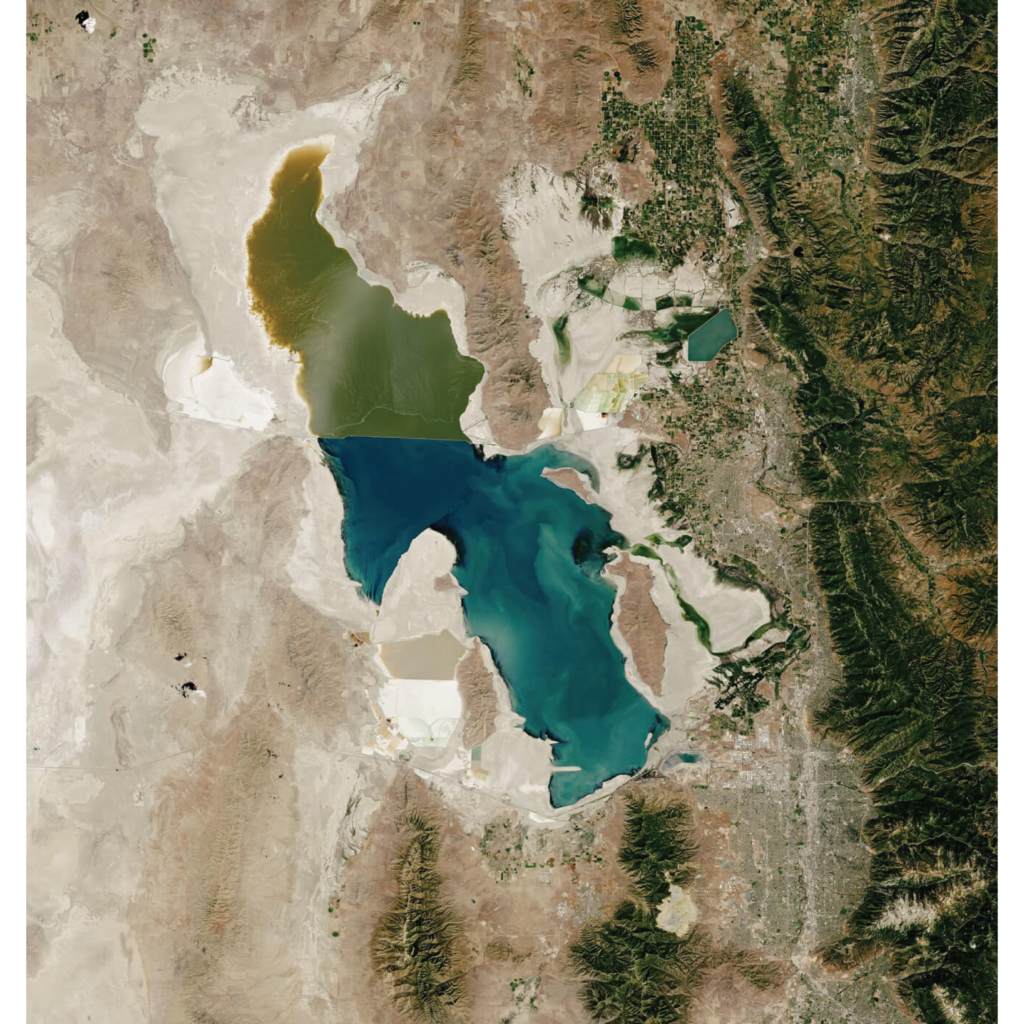
The Great Salt Lake has lost roughly 22 feet in water level since the mid-1980s.
New Writing Partner Conversation New Conversation
Paragraph 10 0
No paragraph-level conversations. Start one.
New Writing Partner Conversation New Conversation
Paragraph 10, Sentence 1 0
No sentence-level conversations. Start one.

New Writing Partner Conversation New Conversation
Paragraph 11 (Image 1) 0
No whole image conversations. Start one.
New Writing Partner Conversation New Conversation
Whole Image 0
No whole image conversations. Start one.

Summer 1985

New Writing Partner Conversation New Conversation
Paragraph 12 0
No paragraph-level conversations. Start one.
New Writing Partner Conversation New Conversation
Paragraph 12, Sentence 1 0
No sentence-level conversations. Start one.

New Writing Partner Conversation New Conversation
Paragraph 13 (Image 2) 0
No whole image conversations. Start one.
New Writing Partner Conversation New Conversation
Whole Image 0
No whole image conversations. Start one.

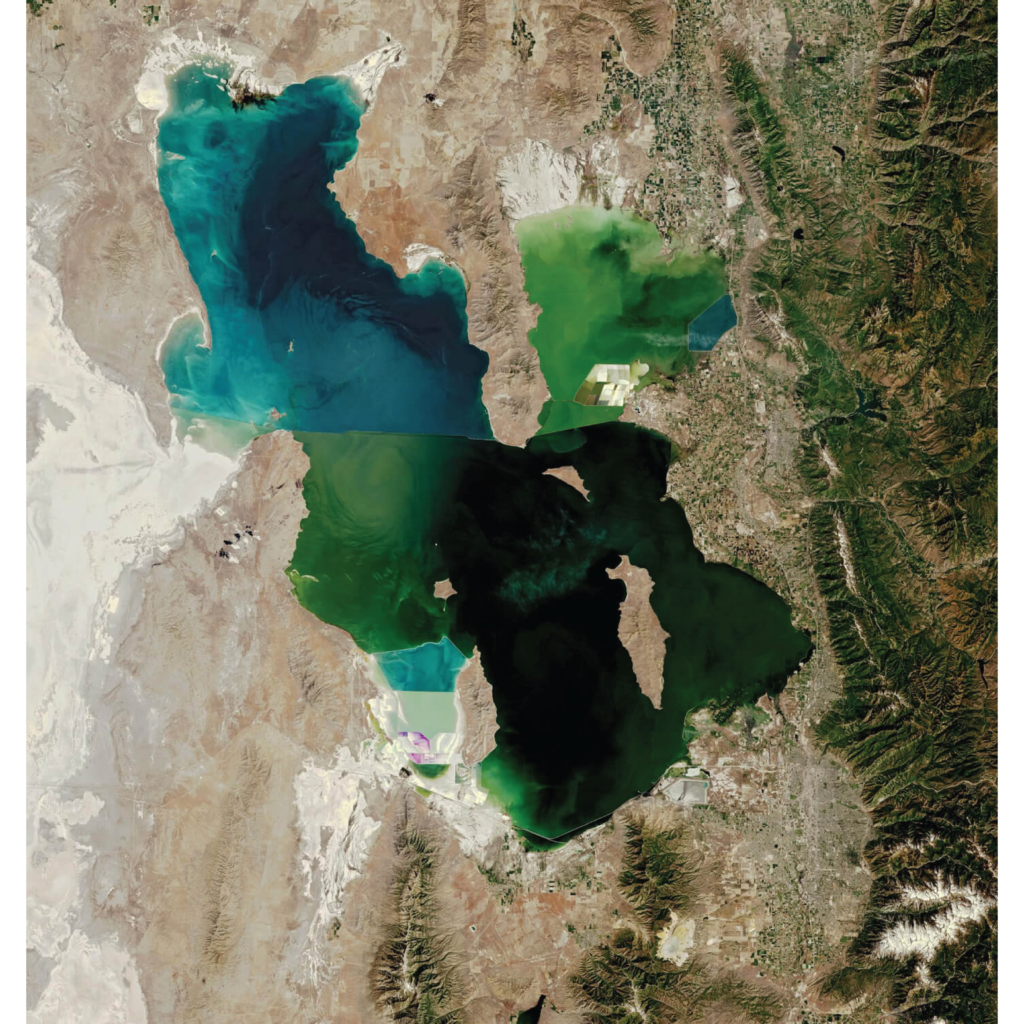
Summer 2022

New Writing Partner Conversation New Conversation
Paragraph 14 0
No paragraph-level conversations. Start one.
New Writing Partner Conversation New Conversation
Paragraph 14, Sentence 1 0
No sentence-level conversations. Start one.

A Lake in Decline

New Writing Partner Conversation New Conversation
Paragraph 15 0
No paragraph-level conversations. Start one.
New Writing Partner Conversation New Conversation
Paragraph 15, Sentence 1 0
No sentence-level conversations. Start one.

Saline lakes, such as the Great Salt Lake, are unique hydrological systems. Unlike freshwater lakes, saline lakes are terminal, meaning they have no natural outlets. Water that flows into the lake has no escape other than through evaporation. As the water evaporates, it leaves behind salt and minerals that have accumulated from the lake’s inflows, causing terminal lakes to be much saltier than other lakes. This creates unique ecosystems that are specially adapted to these conditions but are also highly sensitive to changes in water inflows.

New Writing Partner Conversation New Conversation
Paragraph 16 0
No paragraph-level conversations. Start one.
New Writing Partner Conversation New Conversation
Paragraph 16, Sentence 1 0
No sentence-level conversations. Start one.
New Writing Partner Conversation New Conversation
Paragraph 16, Sentence 2 0
No sentence-level conversations. Start one.
New Writing Partner Conversation New Conversation
Paragraph 16, Sentence 3 0
No sentence-level conversations. Start one.
New Writing Partner Conversation New Conversation
Paragraph 16, Sentence 4 0
No sentence-level conversations. Start one.
New Writing Partner Conversation New Conversation
Paragraph 16, Sentence 5 0
No sentence-level conversations. Start one.

While a variety of factors have contributed to the Great Salt Lake’s decline—including drought, climate variability, and population growth—the biggest contributor is water diverted for agricultural use. Over 70 percent of water diversions in Utah are used for agriculture, often for growing water-intensive crops such as alfalfa.1 These diversions have significantly reduced inflows to the lake. One recent study, for example, found that 85 percent of the lake’s area loss can be attributed to irrigated agriculture.2 Overall, the lake has lost 60 percent of its total surface area (see Figure 1). To restore the lake to a healthy level, the State of Utah estimates that additional inflows of between 471,000 acre-feet to 1 million acre-feet will be needed each year.3

New Writing Partner Conversation New Conversation
Paragraph 17 0
No paragraph-level conversations. Start one.
New Writing Partner Conversation New Conversation
Paragraph 17, Sentence 1 0
No sentence-level conversations. Start one.
New Writing Partner Conversation New Conversation
Paragraph 17, Sentence 2 0
No sentence-level conversations. Start one.
New Writing Partner Conversation New Conversation
Paragraph 17, Sentence 3 0
No sentence-level conversations. Start one.
New Writing Partner Conversation New Conversation
Paragraph 17, Sentence 4 0
No sentence-level conversations. Start one.

Figure 1

New Writing Partner Conversation New Conversation
Paragraph 18 0
No paragraph-level conversations. Start one.
New Writing Partner Conversation New Conversation
Paragraph 18, Sentence 1 0
No sentence-level conversations. Start one.
The Shrinking Great Salt Lake
New Writing Partner Conversation New Conversation
Paragraph 19 0
No paragraph-level conversations. Start one.
New Writing Partner Conversation New Conversation
Paragraph 19, Sentence 1 0
No sentence-level conversations. Start one.

The Great Salt Lake has lost 60 percent of its total surface area. Each color represents a significant change in the lake’s perimeter, with the deepest blue representing the largest it has been and the beige showing its current, smallest boundary.

New Writing Partner Conversation New Conversation
Paragraph 20 0
No paragraph-level conversations. Start one.
New Writing Partner Conversation New Conversation
Paragraph 20, Sentence 1 0
No sentence-level conversations. Start one.
New Writing Partner Conversation New Conversation
Paragraph 20, Sentence 2 0
No sentence-level conversations. Start one.

New Writing Partner Conversation New Conversation
Paragraph 21 (Image 3) 0
No whole image conversations. Start one.
New Writing Partner Conversation New Conversation
Whole Image 0
No whole image conversations. Start one.

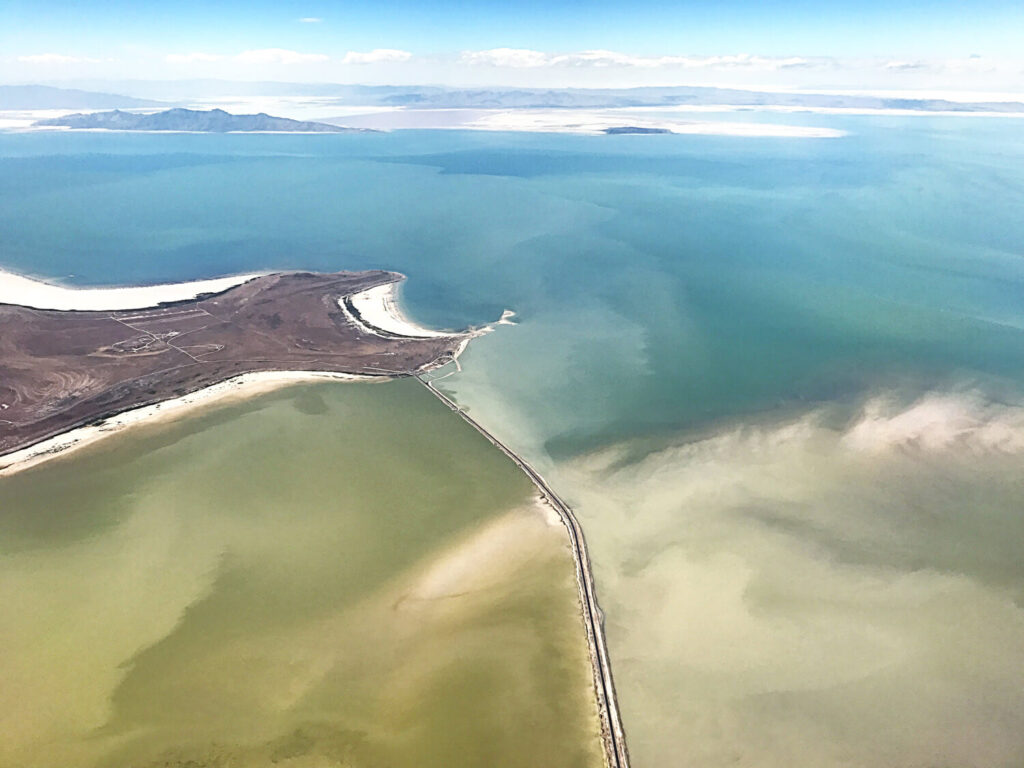
The consequences of the lake’s decline are potentially severe. Saline lakes are among the most efficient ecosystems at recycling nutrients, supporting abundant food sources for wildlife. The Great Salt Lake provides crucial habitat for over 200 bird species, including storks, herons, pelicans, and gulls, all of which feed on phytoplankton and brine shrimp in the lake. Yet if salinity levels get too high, the ecosystem could reach a tipping point and become too harsh for wildlife to survive.

New Writing Partner Conversation New Conversation
Paragraph 22 0
No paragraph-level conversations. Start one.
New Writing Partner Conversation New Conversation
Paragraph 22, Sentence 1 0
No sentence-level conversations. Start one.
New Writing Partner Conversation New Conversation
Paragraph 22, Sentence 2 0
No sentence-level conversations. Start one.
New Writing Partner Conversation New Conversation
Paragraph 22, Sentence 3 0
No sentence-level conversations. Start one.
New Writing Partner Conversation New Conversation
Paragraph 22, Sentence 4 0
No sentence-level conversations. Start one.

Public health risks are another serious concern. As the lake shrinks, the exposed lakebed releases toxic dust that contains lead, arsenic, and cadmium. When high winds blow across the dry lakebed, they can carry these hazardous particles into the air, where they pose health risks to millions of residents in and around Salt Lake City. Dust mitigation strategies can help but are often prohibitively expensive and not entirely effective, leaving communities vulnerable to respiratory illnesses and other health complications, including higher rates of infant mortality.4

New Writing Partner Conversation New Conversation
Paragraph 23 0
No paragraph-level conversations. Start one.
New Writing Partner Conversation New Conversation
Paragraph 23, Sentence 1 0
No sentence-level conversations. Start one.
New Writing Partner Conversation New Conversation
Paragraph 23, Sentence 2 0
No sentence-level conversations. Start one.
New Writing Partner Conversation New Conversation
Paragraph 23, Sentence 3 0
No sentence-level conversations. Start one.
New Writing Partner Conversation New Conversation
Paragraph 23, Sentence 4 0
No sentence-level conversations. Start one.

The decline of the Great Salt Lake could also have significant economic consequences, both locally and globally. The lake generates nearly $2 billion in annual economic value through mineral extraction, brine shrimp harvesting, and other uses.5 Companies extract vast quantities of salt and potassium sulfate from the lake, which are crucial inputs for industries worldwide. The lake supplies 40 percent of the global brine shrimp market, linking the Great Salt Lake to seafood production and agriculture worldwide.6 But as lake levels drop, these industries face operational challenges, threatening the livelihoods they support.

New Writing Partner Conversation New Conversation
Paragraph 24 0
No paragraph-level conversations. Start one.
New Writing Partner Conversation New Conversation
Paragraph 24, Sentence 1 0
No sentence-level conversations. Start one.
New Writing Partner Conversation New Conversation
Paragraph 24, Sentence 2 0
No sentence-level conversations. Start one.
New Writing Partner Conversation New Conversation
Paragraph 24, Sentence 3 0
No sentence-level conversations. Start one.

There are also potential consequences to Utah’s recreation and tourism industries. The shrinking lake has indirect but substantial effects on the skiing industry, which remains a key economic driver for Utah. Dust from the exposed lakebed settles on snow in the nearby Wasatch Mountains, reducing the snow’s reflective capacity and speeding snowmelt. As a result, ski seasons at popular resorts like Alta may be shortened. Meanwhile, the lake itself draws thousands of visitors for boating, sailing, waterfowl hunting, and hiking. While these recreational activities are difficult to quantify in economic terms, they are important amenities provided by the Great Salt Lake.7
New Writing Partner Conversation New Conversation
Paragraph 25 0
No paragraph-level conversations. Start one.
New Writing Partner Conversation New Conversation
Paragraph 25, Sentence 1 0
No sentence-level conversations. Start one.
New Writing Partner Conversation New Conversation
Paragraph 25, Sentence 2 0
No sentence-level conversations. Start one.
New Writing Partner Conversation New Conversation
Paragraph 25, Sentence 3 0
No sentence-level conversations. Start one.
New Writing Partner Conversation New Conversation
Paragraph 25, Sentence 4 0
No sentence-level conversations. Start one.
New Writing Partner Conversation New Conversation
Paragraph 25, Sentence 5 0
No sentence-level conversations. Start one.
New Writing Partner Conversation New Conversation
Paragraph 25, Sentence 6 0
No sentence-level conversations. Start one.

New Writing Partner Conversation New Conversation
Paragraph 26 (Image 4) 0
No whole image conversations. Start one.
New Writing Partner Conversation New Conversation
Whole Image 0
No whole image conversations. Start one.

The Opportunity for Water Leasing

New Writing Partner Conversation New Conversation
Paragraph 27 0
No paragraph-level conversations. Start one.
New Writing Partner Conversation New Conversation
Paragraph 27, Sentence 1 0
No sentence-level conversations. Start one.

At its core, restoring the Great Salt Lake will require finding creative ways to increase the amount of water flowing into the lake. This means boosting inflows from the lake’s three main tributaries—the Bear, Weber, and Jordan Rivers—which collectively supply the majority of the lake’s water. Given the dominant role that agriculture plays in water use in the Great Salt Lake Basin, this effort will necessarily involve working collaboratively with farmers who control a significant portion of the basin’s water rights.

New Writing Partner Conversation New Conversation
Paragraph 28 0
No paragraph-level conversations. Start one.
New Writing Partner Conversation New Conversation
Paragraph 28, Sentence 1 0
No sentence-level conversations. Start one.
New Writing Partner Conversation New Conversation
Paragraph 28, Sentence 2 0
No sentence-level conversations. Start one.
New Writing Partner Conversation New Conversation
Paragraph 28, Sentence 3 0
No sentence-level conversations. Start one.

Utah has taken a number of steps to encourage voluntary solutions that work collaboratively with the agricultural community. The state has overhauled several of its water laws to discourage waste and reduce barriers to leasing water for environmental flows (see Box 1). Utah’s water rights system is governed by the prior appropriation doctrine, often summarized as “first in time, first in right.” This legal framework prioritizes older (senior) water rights over newer (junior) ones and requires water to be put to “beneficial use,” historically defined as irrigation or municipal uses. Traditionally, a rights holder who did not put all of their allotted water toward such uses could risk forfeiting a portion of their allotment. Such “use it or lose it” rules often discouraged water conservation, as farmers had no incentive to leave water in streams or adopt more efficient irrigation methods.

New Writing Partner Conversation New Conversation
Paragraph 29 0
No paragraph-level conversations. Start one.
New Writing Partner Conversation New Conversation
Paragraph 29, Sentence 1 0
No sentence-level conversations. Start one.
New Writing Partner Conversation New Conversation
Paragraph 29, Sentence 2 0
No sentence-level conversations. Start one.
New Writing Partner Conversation New Conversation
Paragraph 29, Sentence 3 0
No sentence-level conversations. Start one.
New Writing Partner Conversation New Conversation
Paragraph 29, Sentence 4 0
No sentence-level conversations. Start one.
New Writing Partner Conversation New Conversation
Paragraph 29, Sentence 5 0
No sentence-level conversations. Start one.
New Writing Partner Conversation New Conversation
Paragraph 29, Sentence 6 0
No sentence-level conversations. Start one.

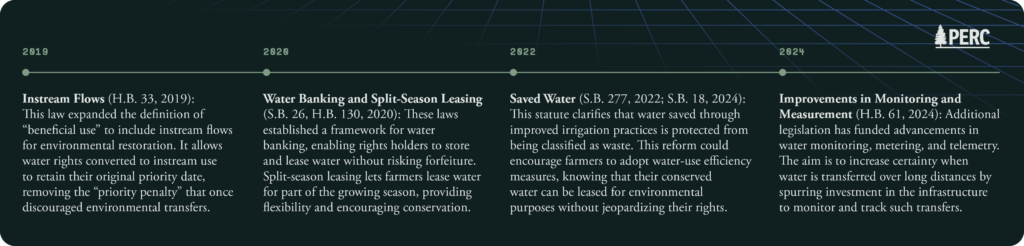
Recent legislative changes have modernized this system, making it more flexible and conservation oriented. Key reforms have expanded the definition of “beneficial use” to include environmental flows, allowing rights to be dedicated to restoring the Great Salt Lake. The state has also amended its “saved water” statute to protect conserved water from being classified as waste, thereby eliminating the “use it or lose it” penalty. Now, farmers who adopt efficient irrigation practices can conserve water without risking the forfeiture of their rights. Additionally, Utah has authorized split-season leasing, which allows farmers to lease water for part of the growing season. This arrangement provides flexibility for farmers to continue farming while also contributing to lake restoration efforts.

New Writing Partner Conversation New Conversation
Paragraph 30 0
No paragraph-level conversations. Start one.
New Writing Partner Conversation New Conversation
Paragraph 30, Sentence 1 0
No sentence-level conversations. Start one.
New Writing Partner Conversation New Conversation
Paragraph 30, Sentence 2 0
No sentence-level conversations. Start one.
New Writing Partner Conversation New Conversation
Paragraph 30, Sentence 3 0
No sentence-level conversations. Start one.
New Writing Partner Conversation New Conversation
Paragraph 30, Sentence 4 0
No sentence-level conversations. Start one.
New Writing Partner Conversation New Conversation
Paragraph 30, Sentence 5 0
No sentence-level conversations. Start one.
New Writing Partner Conversation New Conversation
Paragraph 30, Sentence 6 0
No sentence-level conversations. Start one.

The state has also made substantial financial investments to promote water-saving practices among farmers. The legislature has committed over $200 million to agricultural optimization projects, encouraging farmers to adopt advanced irrigation technologies such as drip systems that could reduce water use. Additionally, the state created the Great Salt Lake Watershed Enhancement Trust, funded with $40 million to offer farmers compensation for leasing water in ways that benefit the lake. In 2023, the state also established a new Office of the Great Salt Lake Water Commissioner to develop a strategic plan to restore the lake and coordinate efforts across agencies to support lake restoration.

New Writing Partner Conversation New Conversation
Paragraph 31 0
No paragraph-level conversations. Start one.
New Writing Partner Conversation New Conversation
Paragraph 31, Sentence 1 0
No sentence-level conversations. Start one.
New Writing Partner Conversation New Conversation
Paragraph 31, Sentence 2 0
No sentence-level conversations. Start one.
New Writing Partner Conversation New Conversation
Paragraph 31, Sentence 3 0
No sentence-level conversations. Start one.
New Writing Partner Conversation New Conversation
Paragraph 31, Sentence 4 0
No sentence-level conversations. Start one.

Together, these efforts represent a massive, concerted effort to restore the Great Salt Lake while working cooperatively with water users, particularly farmers (see Box 2). Farmers control the majority of water rights in the basin, which means that any efforts to restore the lake must include them. Voluntary market mechanisms, such as water leasing, create an opportunity to work collaboratively and cooperatively with these rights holders and find win-win solutions. Alfalfa farming in particular offers some flexibility for conservation efforts partly due to its water-intensive nature. Because alfalfa is cut multiple times throughout the growing season, it lends itself to options like split-season leasing, where farmers could forgo a cutting in exchange for compensation. The crop can also withstand periods of reduced irrigation without severe long-term impacts, allowing for water-saving practices like partial-season irrigation. These opportunities exemplify how thoughtful water management can balance agricultural productivity with the urgent need to restore the Great Salt Lake.

New Writing Partner Conversation New Conversation
Paragraph 32 0
No paragraph-level conversations. Start one.
New Writing Partner Conversation New Conversation
Paragraph 32, Sentence 1 0
No sentence-level conversations. Start one.
New Writing Partner Conversation New Conversation
Paragraph 32, Sentence 2 0
No sentence-level conversations. Start one.
New Writing Partner Conversation New Conversation
Paragraph 32, Sentence 3 0
No sentence-level conversations. Start one.
New Writing Partner Conversation New Conversation
Paragraph 32, Sentence 4 0
No sentence-level conversations. Start one.
New Writing Partner Conversation New Conversation
Paragraph 32, Sentence 5 0
No sentence-level conversations. Start one.
New Writing Partner Conversation New Conversation
Paragraph 32, Sentence 6 0
No sentence-level conversations. Start one.
New Writing Partner Conversation New Conversation
Paragraph 32, Sentence 7 0
No sentence-level conversations. Start one.

Box 1

New Writing Partner Conversation New Conversation
Paragraph 33 0
No paragraph-level conversations. Start one.
New Writing Partner Conversation New Conversation
Paragraph 33, Sentence 1 0
No sentence-level conversations. Start one.
Key Legislative Changes in Utah Water Law
New Writing Partner Conversation New Conversation
Paragraph 34 0
No paragraph-level conversations. Start one.
New Writing Partner Conversation New Conversation
Paragraph 34, Sentence 1 0
No sentence-level conversations. Start one.

Utah’s recent legislative reforms have transformed the way water can be managed for environmental purposes, making voluntary leasing a feasible option for restoring the Great Salt Lake. Here are some of the key changes:
New Writing Partner Conversation New Conversation
Paragraph 35 0
No paragraph-level conversations. Start one.
New Writing Partner Conversation New Conversation
Paragraph 35, Sentence 1 0
No sentence-level conversations. Start one.
New Writing Partner Conversation New Conversation
Paragraph 35, Sentence 2 0
No sentence-level conversations. Start one.

New Writing Partner Conversation New Conversation
Paragraph 36 (Image 5) 0
No whole image conversations. Start one.
New Writing Partner Conversation New Conversation
Whole Image 0
No whole image conversations. Start one.

box 2

New Writing Partner Conversation New Conversation
Paragraph 37 0
No paragraph-level conversations. Start one.
New Writing Partner Conversation New Conversation
Paragraph 37, Sentence 1 0
No sentence-level conversations. Start one.
Understanding Water Use in the Great Salt Lake Basin
New Writing Partner Conversation New Conversation
Paragraph 38 0
No paragraph-level conversations. Start one.
New Writing Partner Conversation New Conversation
Paragraph 38, Sentence 1 0
No sentence-level conversations. Start one.

The Bear, Jordan, and Weber Rivers supply water to farms and cities, to mining operations, and for various other industrial activities. The majority of water used from these rivers is for agriculture, illustrating the immense potential for partnerships with farmers to restore the Great Salt Lake. As of 2023, approximately 418,000 acres of farmland were actively irrigated in the Great Salt Lake Basin.8 Farms in Utah primarily grow alfalfa, which is particularly water-intensive, requiring about three to five acre-feet of water per acre. On average, Utah has grown more alfalfa each year since 1950.9

New Writing Partner Conversation New Conversation
Paragraph 39 0
No paragraph-level conversations. Start one.
New Writing Partner Conversation New Conversation
Paragraph 39, Sentence 1 0
No sentence-level conversations. Start one.
New Writing Partner Conversation New Conversation
Paragraph 39, Sentence 2 0
No sentence-level conversations. Start one.
New Writing Partner Conversation New Conversation
Paragraph 39, Sentence 3 0
No sentence-level conversations. Start one.
New Writing Partner Conversation New Conversation
Paragraph 39, Sentence 4 0
No sentence-level conversations. Start one.

The large number of acreage devoted to alfalfa highlights the potential to conserve water through leasing in the basin. By choosing to switch to a less water-intensive crop, change irrigation practices, or forgo marginal cuttings of alfalfa, farmers could generate water savings that earn them lease payments. These payments would simultaneously cover their forgone agricultural revenue and help restore lake levels.

New Writing Partner Conversation New Conversation
Paragraph 40 0
No paragraph-level conversations. Start one.
New Writing Partner Conversation New Conversation
Paragraph 40, Sentence 1 0
No sentence-level conversations. Start one.
New Writing Partner Conversation New Conversation
Paragraph 40, Sentence 2 0
No sentence-level conversations. Start one.
New Writing Partner Conversation New Conversation
Paragraph 40, Sentence 3 0
No sentence-level conversations. Start one.

Beyond alfalfa, additional water savings could be generated by reducing mining operations or partnering with cities to reduce water use. While these two sectors make up significantly less of the total water used in the basin, they could still play a crucial role in bolstering lake levels.

New Writing Partner Conversation New Conversation
Paragraph 41 0
No paragraph-level conversations. Start one.
New Writing Partner Conversation New Conversation
Paragraph 41, Sentence 1 0
No sentence-level conversations. Start one.
New Writing Partner Conversation New Conversation
Paragraph 41, Sentence 2 0
No sentence-level conversations. Start one.

The Obstacles to Water Leasing

New Writing Partner Conversation New Conversation
Paragraph 42 0
No paragraph-level conversations. Start one.
New Writing Partner Conversation New Conversation
Paragraph 42, Sentence 1 0
No sentence-level conversations. Start one.

Although there is unprecedented legal and financial opportunity for water leasing to help refill the Great Salt Lake, there are a number of obstacles that limit leasing. Indeed, despite the legislative reforms in recent years and the state’s focus on voluntary transfers, few leases have occurred to date. Many of the obstacles to leasing boil down to two fundamental challenges: quantifying water savings on the farm and then ensuring that water leased from a rights holder actually makes it to the lake.

New Writing Partner Conversation New Conversation
Paragraph 43 0
No paragraph-level conversations. Start one.
New Writing Partner Conversation New Conversation
Paragraph 43, Sentence 1 0
No sentence-level conversations. Start one.
New Writing Partner Conversation New Conversation
Paragraph 43, Sentence 2 0
No sentence-level conversations. Start one.
New Writing Partner Conversation New Conversation
Paragraph 43, Sentence 3 0
No sentence-level conversations. Start one.

In practice, both scenarios can be challenging. First, if a farmer decides to fallow their land, the resulting water savings depend heavily on their irrigation practices before fallowing. Similarly, switching from alfalfa to corn poses a comparable issue; without establishing a baseline of water use prior to the change, estimating the resulting water savings becomes little more than an educated guess.

New Writing Partner Conversation New Conversation
Paragraph 44 0
No paragraph-level conversations. Start one.
New Writing Partner Conversation New Conversation
Paragraph 44, Sentence 1 0
No sentence-level conversations. Start one.
New Writing Partner Conversation New Conversation
Paragraph 44, Sentence 2 0
No sentence-level conversations. Start one.
New Writing Partner Conversation New Conversation
Paragraph 44, Sentence 3 0
No sentence-level conversations. Start one.

Second, even if on-farm water savings can be measured and leased for lake restoration, that leased water must make its way through a labyrinth of rivers and dams, past other diverters, and to the lake. This pursuit of ensuring water reaches the lake is often called “shepherding.” Just as a shepherd guides his sheep from pasture to water, protecting his flock from dangers, guiding it around obstacles, and ensuring that no one is left behind, so too must water lessees ensure that leased water makes it to the Great Salt Lake. The term rightly captures the complexity of legal, hydrological, technical, and social barriers facing water transfers. This section describes the key challenges related to quantifying on-farm water savings and shepherding leased water to the lake.

New Writing Partner Conversation New Conversation
Paragraph 45 0
No paragraph-level conversations. Start one.
New Writing Partner Conversation New Conversation
Paragraph 45, Sentence 1 0
No sentence-level conversations. Start one.
New Writing Partner Conversation New Conversation
Paragraph 45, Sentence 2 0
No sentence-level conversations. Start one.
New Writing Partner Conversation New Conversation
Paragraph 45, Sentence 3 0
No sentence-level conversations. Start one.
New Writing Partner Conversation New Conversation
Paragraph 45, Sentence 4 0
No sentence-level conversations. Start one.
New Writing Partner Conversation New Conversation
Paragraph 45, Sentence 5 0
No sentence-level conversations. Start one.

Figure 2

New Writing Partner Conversation New Conversation
Paragraph 46 0
No paragraph-level conversations. Start one.
New Writing Partner Conversation New Conversation
Paragraph 46, Sentence 1 0
No sentence-level conversations. Start one.
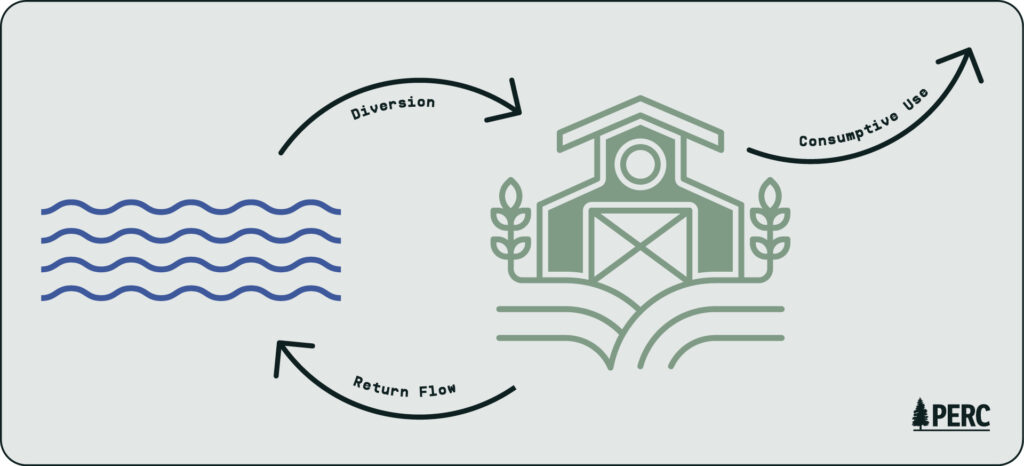
Elements of Water Use
New Writing Partner Conversation New Conversation
Paragraph 47 0
No paragraph-level conversations. Start one.
New Writing Partner Conversation New Conversation
Paragraph 47, Sentence 1 0
No sentence-level conversations. Start one.

Water use is often described in terms of diversion, consumptive use, and return flow. Diversion refers to the amount of water removed from a river, stream, or canal. Consumptive use is the amount of diverted water that does not return to the water system because it is applied to a field and then either absorbed by crops or the soil or evaporates. Return flow describes the amount of water that is diverted and applied but then flows back into the stream.
New Writing Partner Conversation New Conversation
Paragraph 48 0
No paragraph-level conversations. Start one.
New Writing Partner Conversation New Conversation
Paragraph 48, Sentence 1 0
No sentence-level conversations. Start one.
New Writing Partner Conversation New Conversation
Paragraph 48, Sentence 2 0
No sentence-level conversations. Start one.
New Writing Partner Conversation New Conversation
Paragraph 48, Sentence 3 0
No sentence-level conversations. Start one.
New Writing Partner Conversation New Conversation
Paragraph 48, Sentence 4 0
No sentence-level conversations. Start one.

New Writing Partner Conversation New Conversation
Paragraph 49 (Image 6) 0
No whole image conversations. Start one.
New Writing Partner Conversation New Conversation
Whole Image 0
No whole image conversations. Start one.
Measurement and Monitoring Challenges
New Writing Partner Conversation New Conversation
Paragraph 50 0
No paragraph-level conversations. Start one.
New Writing Partner Conversation New Conversation
Paragraph 50, Sentence 1 0
No sentence-level conversations. Start one.

Accurately measuring and monitoring water use is critical to ensuring the success of water leasing programs. This, however, is easier said than done. Water rights are often legally defined in terms of diversion, but in practice, consumptive use and return flow are also important (see Figure 2). Each presents unique measurement and monitoring challenges.

New Writing Partner Conversation New Conversation
Paragraph 51 0
No paragraph-level conversations. Start one.
New Writing Partner Conversation New Conversation
Paragraph 51, Sentence 1 0
No sentence-level conversations. Start one.
New Writing Partner Conversation New Conversation
Paragraph 51, Sentence 2 0
No sentence-level conversations. Start one.
New Writing Partner Conversation New Conversation
Paragraph 51, Sentence 3 0
No sentence-level conversations. Start one.
New Writing Partner Conversation New Conversation
Paragraph 51, Sentence 4 0
No sentence-level conversations. Start one.
  • Diversion refers to the total amount of water a farmer diverts from a river, stream, or canal. The maximum volume a farmer is authorized to divert is often called “paper water,” while the actual amount diverted in a given year is known as “wet water.” These amounts can vary based on factors like seasonal water availability, diversion infrastructure, environmental conditions, and the farmer’s specific water needs.
  • New Writing Partner Conversation New Conversation
    Paragraph 52 0
    No paragraph-level conversations. Start one.
    New Writing Partner Conversation New Conversation
    Paragraph 52, Sentence 1 0
    No sentence-level conversations. Start one.
    New Writing Partner Conversation New Conversation
    Paragraph 52, Sentence 2 0
    No sentence-level conversations. Start one.
    New Writing Partner Conversation New Conversation
    Paragraph 52, Sentence 3 0
    No sentence-level conversations. Start one.
  • Consumptive use (depletion) is the portion of diverted water that is actually consumed and does not flow back into the water system. This includes water that evaporates or is absorbed by crops. Estimating consumptive use has historically been difficult because it varies based on crop type, irrigation method, and environmental conditions.
  • New Writing Partner Conversation New Conversation
    Paragraph 53 0
    No paragraph-level conversations. Start one.
    New Writing Partner Conversation New Conversation
    Paragraph 53, Sentence 1 0
    No sentence-level conversations. Start one.
    New Writing Partner Conversation New Conversation
    Paragraph 53, Sentence 2 0
    No sentence-level conversations. Start one.
    New Writing Partner Conversation New Conversation
    Paragraph 53, Sentence 3 0
    No sentence-level conversations. Start one.
  • Return flow is the portion of diverted water that eventually makes its way back into the water system, either by seeping into groundwater or flowing back into streams. This water is important because, even though it is initially diverted by one user, once it returns to the system, it is often relied upon by downstream users to meet their own water needs. Water that ultimately makes its way to the Great Salt Lake is either water that was never diverted in the first place or diverted water that reenters the system through return flow.
  • New Writing Partner Conversation New Conversation
    Paragraph 54 0
    No paragraph-level conversations. Start one.
    New Writing Partner Conversation New Conversation
    Paragraph 54, Sentence 1 0
    No sentence-level conversations. Start one.
    New Writing Partner Conversation New Conversation
    Paragraph 54, Sentence 2 0
    No sentence-level conversations. Start one.
    New Writing Partner Conversation New Conversation
    Paragraph 54, Sentence 3 0
    No sentence-level conversations. Start one.

The complexity of measuring these components creates uncertainty for both farmers and water managers and is the source of the first obstacle to leasing: quantifying on-farm savings. For example, if a farmer adopts more efficient irrigation practices, the reduction in consumptive use must be accurately quantified to determine how much water is saved and can be leased for conservation purposes. Traditional methods of measuring water use are often insufficient or outdated. New technologies, like satellite-based evapotranspiration (ET) monitoring, can provide more accurate estimates of consumptive use, but these technologies are still being integrated into state water management systems.

New Writing Partner Conversation New Conversation
Paragraph 55 0
No paragraph-level conversations. Start one.
New Writing Partner Conversation New Conversation
Paragraph 55, Sentence 1 0
No sentence-level conversations. Start one.
New Writing Partner Conversation New Conversation
Paragraph 55, Sentence 2 0
No sentence-level conversations. Start one.
New Writing Partner Conversation New Conversation
Paragraph 55, Sentence 3 0
No sentence-level conversations. Start one.
New Writing Partner Conversation New Conversation
Paragraph 55, Sentence 4 0
No sentence-level conversations. Start one.

Monitoring water transfers is equally challenging and contributes to shepherding challenges. Once water is saved and leased, it must be shepherded through a labyrinth of ditches, canals, and rivers to ensure it reaches the Great Salt Lake. Any losses along the way—due to seepage, evaporation, or downstream diversions—can reduce the effectiveness of the leasing program (see Figure 3). Ensuring that leased water is protected and delivered as intended requires a robust system of monitoring and enforcement, which adds administrative and technical complexity.

New Writing Partner Conversation New Conversation
Paragraph 56 0
No paragraph-level conversations. Start one.
New Writing Partner Conversation New Conversation
Paragraph 56, Sentence 1 0
No sentence-level conversations. Start one.
New Writing Partner Conversation New Conversation
Paragraph 56, Sentence 2 0
No sentence-level conversations. Start one.
New Writing Partner Conversation New Conversation
Paragraph 56, Sentence 3 0
No sentence-level conversations. Start one.
New Writing Partner Conversation New Conversation
Paragraph 56, Sentence 4 0
No sentence-level conversations. Start one.

Another critical consideration is whether leased water provides an actual increase in inflows to the Great Salt Lake, a concept referred to as “additionality.” In simple terms, a lease is considered beneficial when the water being leased would not have otherwise made it to the lake. If a lease is not additional, it means that the leased water would have reached the lake regardless.10 This is why accurate monitoring of diversions and consumptive use is crucial. Without reliable measurement systems, it becomes more likely that funds will be spent on leases that do not necessarily increase the lake’s inflows, potentially reducing the overall effectiveness of water leasing programs.

New Writing Partner Conversation New Conversation
Paragraph 57 0
No paragraph-level conversations. Start one.
New Writing Partner Conversation New Conversation
Paragraph 57, Sentence 1 0
No sentence-level conversations. Start one.
New Writing Partner Conversation New Conversation
Paragraph 57, Sentence 2 0
No sentence-level conversations. Start one.
New Writing Partner Conversation New Conversation
Paragraph 57, Sentence 3 0
No sentence-level conversations. Start one.
New Writing Partner Conversation New Conversation
Paragraph 57, Sentence 4 0
No sentence-level conversations. Start one.

figure3

New Writing Partner Conversation New Conversation
Paragraph 58 0
No paragraph-level conversations. Start one.
New Writing Partner Conversation New Conversation
Paragraph 58, Sentence 1 0
No sentence-level conversations. Start one.
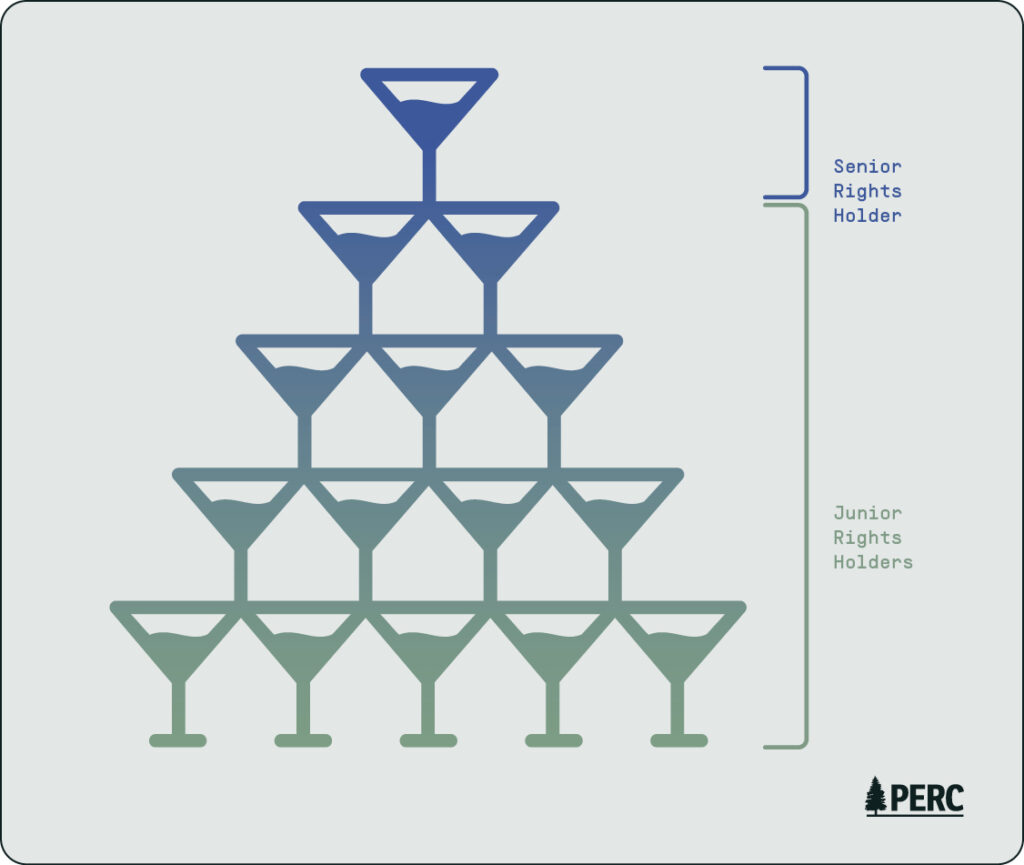
Water Leasing Under Prior Appropriation
New Writing Partner Conversation New Conversation
Paragraph 59 0
No paragraph-level conversations. Start one.
New Writing Partner Conversation New Conversation
Paragraph 59, Sentence 1 0
No sentence-level conversations. Start one.

Prior appropriation allocates water through time, not space. Think of it like a champagne tower: The top glass represents the most senior water right, and each lower tier represents more junior rights. Champagne (water) gets poured into the top glass first, and only once it overflows does it reach the next level. But under prior appropriation, the most senior right gets satisfied first, no matter where the rights are located.

New Writing Partner Conversation New Conversation
Paragraph 60 0
No paragraph-level conversations. Start one.
New Writing Partner Conversation New Conversation
Paragraph 60, Sentence 1 0
No sentence-level conversations. Start one.
New Writing Partner Conversation New Conversation
Paragraph 60, Sentence 2 0
No sentence-level conversations. Start one.
New Writing Partner Conversation New Conversation
Paragraph 60, Sentence 3 0
No sentence-level conversations. Start one.
New Writing Partner Conversation New Conversation
Paragraph 60, Sentence 4 0
No sentence-level conversations. Start one.

This system makes leasing water rights complex, especially when a lease affects return flows or the timing of water availability. If a glass is temporarily removed, for example, the flow pattern for other glasses changes, potentially leaving some dry. In this way, leasing a water right can reduce return flows that other junior users rely on, leading to objections. The key challenge isn’t just temporarily shifting the place or use of a right; it’s ensuring that all other rights in the system remain unimpaired while still allowing water to be leased for other purposes, including Great Salt Lake restoration.
New Writing Partner Conversation New Conversation
Paragraph 61 0
No paragraph-level conversations. Start one.
New Writing Partner Conversation New Conversation
Paragraph 61, Sentence 1 0
No sentence-level conversations. Start one.
New Writing Partner Conversation New Conversation
Paragraph 61, Sentence 2 0
No sentence-level conversations. Start one.
New Writing Partner Conversation New Conversation
Paragraph 61, Sentence 3 0
No sentence-level conversations. Start one.
New Writing Partner Conversation New Conversation
Paragraph 61, Sentence 4 0
No sentence-level conversations. Start one.

New Writing Partner Conversation New Conversation
Paragraph 62 (Image 7) 0
No whole image conversations. Start one.
New Writing Partner Conversation New Conversation
Whole Image 0
No whole image conversations. Start one.

Technical and Data Gaps
New Writing Partner Conversation New Conversation
Paragraph 63 0
No paragraph-level conversations. Start one.
New Writing Partner Conversation New Conversation
Paragraph 63, Sentence 1 0
No sentence-level conversations. Start one.

The success of water leasing programs also depends on having reliable data and the technical infrastructure to support informed decision-making. Currently, there are significant gaps in the availability and accuracy of water-use data in the Great Salt Lake Basin. Many water rights are based on “paper water”; however, the actual “wet water” available in any given year can be far less, depending on hydrological conditions.

New Writing Partner Conversation New Conversation
Paragraph 64 0
No paragraph-level conversations. Start one.
New Writing Partner Conversation New Conversation
Paragraph 64, Sentence 1 0
No sentence-level conversations. Start one.
New Writing Partner Conversation New Conversation
Paragraph 64, Sentence 2 0
No sentence-level conversations. Start one.
New Writing Partner Conversation New Conversation
Paragraph 64, Sentence 3 0
No sentence-level conversations. Start one.

Baseline measurements of consumptive use are often lacking, making it difficult to assess the potential water savings from agricultural optimization projects or other changes in water use. Without accurate data, it is challenging to design fair and effective leasing agreements. For instance, a farmer may be open to participating in a split-season lease, but such an agreement requires precise estimates of how much water could actually be saved. Similarly, a farmer might implement more efficient irrigation methods, yet the true impact on water savings remains uncertain if, for example, increased irrigation efficiency leads to higher consumptive use.11 Advanced technologies, such as remote sensing, could help fill these data gaps, but widespread implementation will require significant consideration and collaboration.

New Writing Partner Conversation New Conversation
Paragraph 65 0
No paragraph-level conversations. Start one.
New Writing Partner Conversation New Conversation
Paragraph 65, Sentence 1 0
No sentence-level conversations. Start one.
New Writing Partner Conversation New Conversation
Paragraph 65, Sentence 2 0
No sentence-level conversations. Start one.
New Writing Partner Conversation New Conversation
Paragraph 65, Sentence 3 0
No sentence-level conversations. Start one.
New Writing Partner Conversation New Conversation
Paragraph 65, Sentence 4 0
No sentence-level conversations. Start one.

Another critical data gap relates to the interconnectedness of water rights. Water in the Great Salt Lake Basin is highly interconnected, with diversions and return flows affecting multiple users across different parts of the watershed. Understanding these connections is essential for evaluating the impact of water transfers and ensuring that they do not inadvertently harm other users. Water models that account for these connections are still in development and require continuous updates and validation to remain effective.

New Writing Partner Conversation New Conversation
Paragraph 66 0
No paragraph-level conversations. Start one.
New Writing Partner Conversation New Conversation
Paragraph 66, Sentence 1 0
No sentence-level conversations. Start one.
New Writing Partner Conversation New Conversation
Paragraph 66, Sentence 2 0
No sentence-level conversations. Start one.
New Writing Partner Conversation New Conversation
Paragraph 66, Sentence 3 0
No sentence-level conversations. Start one.
New Writing Partner Conversation New Conversation
Paragraph 66, Sentence 4 0
No sentence-level conversations. Start one.

Figure 4

New Writing Partner Conversation New Conversation
Paragraph 67 0
No paragraph-level conversations. Start one.
New Writing Partner Conversation New Conversation
Paragraph 67, Sentence 1 0
No sentence-level conversations. Start one.
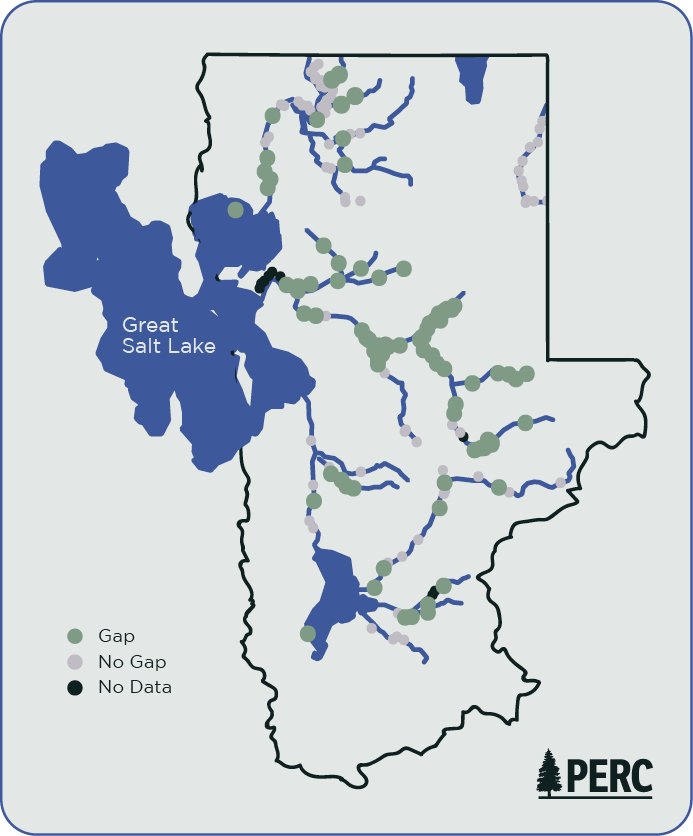
Existing Measurement Infrastructure Gaps
New Writing Partner Conversation New Conversation
Paragraph 68 0
No paragraph-level conversations. Start one.
New Writing Partner Conversation New Conversation
Paragraph 68, Sentence 1 0
No sentence-level conversations. Start one.

This map, inspired by Lukens et al. (2024), shows the existing gaps in measurement and monitoring in the Great Salt Lake Basin. Based on their analysis, they identified locations where measurement could be improved (gap) and where current methods were sufficient (no gap) to help with shepherding, along with other diverse objectives.
New Writing Partner Conversation New Conversation
Paragraph 69 0
No paragraph-level conversations. Start one.
New Writing Partner Conversation New Conversation
Paragraph 69, Sentence 1 0
No sentence-level conversations. Start one.
New Writing Partner Conversation New Conversation
Paragraph 69, Sentence 2 0
No sentence-level conversations. Start one.
New Writing Partner Conversation New Conversation
Paragraph 69, Sentence 3 0
No sentence-level conversations. Start one.

New Writing Partner Conversation New Conversation
Paragraph 70 (Image 8) 0
No whole image conversations. Start one.
New Writing Partner Conversation New Conversation
Whole Image 0
No whole image conversations. Start one.

Legal and Institutional Obstacles
New Writing Partner Conversation New Conversation
Paragraph 71 0
No paragraph-level conversations. Start one.
New Writing Partner Conversation New Conversation
Paragraph 71, Sentence 1 0
No sentence-level conversations. Start one.

Utah’s water laws are rooted in the prior appropriation doctrine, a legal framework designed to allocate scarce water in an arid environment. The doctrine operates on the principle of “first in time, first in right,” meaning that older (senior) water rights take precedence over newer (junior) rights during times of scarcity. While this system can provide certainty to water rights holders, it can sometimes create obstacles to allocating water for environmental purposes, such as restoring flows to the Great Salt Lake.

New Writing Partner Conversation New Conversation
Paragraph 72 0
No paragraph-level conversations. Start one.
New Writing Partner Conversation New Conversation
Paragraph 72, Sentence 1 0
No sentence-level conversations. Start one.
New Writing Partner Conversation New Conversation
Paragraph 72, Sentence 2 0
No sentence-level conversations. Start one.
New Writing Partner Conversation New Conversation
Paragraph 72, Sentence 3 0
No sentence-level conversations. Start one.

One important challenge is the process of changing the legal use associated with a water right. Under current law, any modification to a water right—such as converting it from agricultural use to environmental flow—requires a change-of-use application that quantifies the amount of water that will be “changed.” This application must be approved by the state engineer, who must ensure that the change does not impact the rights of other water rights holders and that the method of quantification is reliable and reasonable.12 Without a baseline, the process can be time-consuming and costly, which deters many farmers from participating in water leasing, particularly for short-term arrangements such as split-season leases.

New Writing Partner Conversation New Conversation
Paragraph 73 0
No paragraph-level conversations. Start one.
New Writing Partner Conversation New Conversation
Paragraph 73, Sentence 1 0
No sentence-level conversations. Start one.
New Writing Partner Conversation New Conversation
Paragraph 73, Sentence 2 0
No sentence-level conversations. Start one.
New Writing Partner Conversation New Conversation
Paragraph 73, Sentence 3 0
No sentence-level conversations. Start one.

In addition, the traditional “use it or lose it” rule further complicates water leasing for instream purposes. Historically, the requirement that water must be put to narrowly defined “beneficial uses” discouraged conservation and left little incentive for farmers to adopt efficient irrigation methods or leave water in streams. Although recent legislative reforms in Utah have mitigated some of these disincentives, lingering fears about forfeiture and loss of rights continue to create hesitation among water rights holders.13

New Writing Partner Conversation New Conversation
Paragraph 74 0
No paragraph-level conversations. Start one.
New Writing Partner Conversation New Conversation
Paragraph 74, Sentence 1 0
No sentence-level conversations. Start one.
New Writing Partner Conversation New Conversation
Paragraph 74, Sentence 2 0
No sentence-level conversations. Start one.
New Writing Partner Conversation New Conversation
Paragraph 74, Sentence 3 0
No sentence-level conversations. Start one.

Another legal obstacle is the fragmentation of water rights across multiple administrative entities. In many cases, water rights are managed by irrigation districts or canal companies, which have their own bylaws and governance structures. Even if an individual farmer is willing to lease water for environmental purposes, district policies may restrict or complicate such transfers. This fragmentation requires coordinated efforts and negotiations to ensure that water-leasing agreements are feasible and effective.14

New Writing Partner Conversation New Conversation
Paragraph 75 0
No paragraph-level conversations. Start one.
New Writing Partner Conversation New Conversation
Paragraph 75, Sentence 1 0
No sentence-level conversations. Start one.
New Writing Partner Conversation New Conversation
Paragraph 75, Sentence 2 0
No sentence-level conversations. Start one.
New Writing Partner Conversation New Conversation
Paragraph 75, Sentence 3 0
No sentence-level conversations. Start one.
New Writing Partner Conversation New Conversation
Paragraph 75, Sentence 4 0
No sentence-level conversations. Start one.
Hydrological Uncertainty
New Writing Partner Conversation New Conversation
Paragraph 76 0
No paragraph-level conversations. Start one.
New Writing Partner Conversation New Conversation
Paragraph 76, Sentence 1 0
No sentence-level conversations. Start one.

Hydrological uncertainty poses another major challenge for water leasing programs. Even when water savings are achieved on a farm, there is no guarantee that the water will make it to the Great Salt Lake. The path from the farm to the lake is fraught with potential obstacles, including dry riverbeds, seepage losses, and diversions by downstream users. The variability of water availability, driven by changing climate conditions, adds another layer of complexity. During drought years, for instance, even senior water rights may not receive their full “paper water” allocation, complicating leasing agreements that rely on consistent water availability.

New Writing Partner Conversation New Conversation
Paragraph 77 0
No paragraph-level conversations. Start one.
New Writing Partner Conversation New Conversation
Paragraph 77, Sentence 1 0
No sentence-level conversations. Start one.
New Writing Partner Conversation New Conversation
Paragraph 77, Sentence 2 0
No sentence-level conversations. Start one.
New Writing Partner Conversation New Conversation
Paragraph 77, Sentence 3 0
No sentence-level conversations. Start one.
New Writing Partner Conversation New Conversation
Paragraph 77, Sentence 4 0
No sentence-level conversations. Start one.
New Writing Partner Conversation New Conversation
Paragraph 77, Sentence 5 0
No sentence-level conversations. Start one.

This uncertainty has led to concerns about shepherding, the process of protecting and managing leased water as it travels to its destination. Ensuring that leased water reaches the lake requires active management and coordination among multiple entities, including dam operators, canal companies, and state water agencies. Timing is also crucial; water released at certain times or under unfavorable conditions may never make it to the lake, rendering the lease ineffective. Addressing these hydrological challenges will require a combination of real-time water management, adaptive strategies, and investments in infrastructure.

New Writing Partner Conversation New Conversation
Paragraph 78 0
No paragraph-level conversations. Start one.
New Writing Partner Conversation New Conversation
Paragraph 78, Sentence 1 0
No sentence-level conversations. Start one.
New Writing Partner Conversation New Conversation
Paragraph 78, Sentence 2 0
No sentence-level conversations. Start one.
New Writing Partner Conversation New Conversation
Paragraph 78, Sentence 3 0
No sentence-level conversations. Start one.
New Writing Partner Conversation New Conversation
Paragraph 78, Sentence 4 0
No sentence-level conversations. Start one.
Social and Economic Considerations
New Writing Partner Conversation New Conversation
Paragraph 79 0
No paragraph-level conversations. Start one.
New Writing Partner Conversation New Conversation
Paragraph 79, Sentence 1 0
No sentence-level conversations. Start one.

The social and economic impacts of water leasing also cannot be overlooked. Many farmers are understandably cautious about participating in water leasing programs, as their livelihoods depend on reliable water access. While compensation can make up for lost revenue, there are concerns about the long-term viability of farming operations and rural agricultural communities if water leasing becomes widespread.15

New Writing Partner Conversation New Conversation
Paragraph 80 0
No paragraph-level conversations. Start one.
New Writing Partner Conversation New Conversation
Paragraph 80, Sentence 1 0
No sentence-level conversations. Start one.
New Writing Partner Conversation New Conversation
Paragraph 80, Sentence 2 0
No sentence-level conversations. Start one.
New Writing Partner Conversation New Conversation
Paragraph 80, Sentence 3 0
No sentence-level conversations. Start one.

Farmers also worry about the potential for permanent changes to water rights. Even though recent legislative reforms have reduced the risk of forfeiture, there is still anxiety about how participation in leasing programs might affect future water access. Given the extensive changes Utah has made to water law, some water rights holders may not be familiar with new options available to them. For example, for decades, rights holders who leased water for instream flow lost their historic priority. Now, thanks to legislative updates, instream flow leases can be temporary, and rights holders retain their priority—but these facts may not be well known. Building trust and raising awareness about these new opportunities will be essential for the success of these programs.

New Writing Partner Conversation New Conversation
Paragraph 81 0
No paragraph-level conversations. Start one.
New Writing Partner Conversation New Conversation
Paragraph 81, Sentence 1 0
No sentence-level conversations. Start one.
New Writing Partner Conversation New Conversation
Paragraph 81, Sentence 2 0
No sentence-level conversations. Start one.
New Writing Partner Conversation New Conversation
Paragraph 81, Sentence 3 0
No sentence-level conversations. Start one.
New Writing Partner Conversation New Conversation
Paragraph 81, Sentence 4 0
No sentence-level conversations. Start one.
New Writing Partner Conversation New Conversation
Paragraph 81, Sentence 5 0
No sentence-level conversations. Start one.
New Writing Partner Conversation New Conversation
Paragraph 81, Sentence 6 0
No sentence-level conversations. Start one.

Conservation groups and state agencies must work closely with farmers to design flexible, fair, and transparent agreements that account for the economic realities of farming and the needs of rural communities.16 Creative solutions, such as split-season leasing, can provide farmers with options that minimize economic impacts while contributing to lake restoration (see Box 3). Alfalfa, for instance, is a resilient crop that can be temporarily dewatered or irrigated less intensively without severe long-term consequences. Highlighting these opportunities and ensuring that farmers are aware of new, more flexible options can help foster a collaborative approach to Great Salt Lake restoration.

New Writing Partner Conversation New Conversation
Paragraph 82 0
No paragraph-level conversations. Start one.
New Writing Partner Conversation New Conversation
Paragraph 82, Sentence 1 0
No sentence-level conversations. Start one.
New Writing Partner Conversation New Conversation
Paragraph 82, Sentence 2 0
No sentence-level conversations. Start one.
New Writing Partner Conversation New Conversation
Paragraph 82, Sentence 3 0
No sentence-level conversations. Start one.

Box 3

New Writing Partner Conversation New Conversation
Paragraph 83 0
No paragraph-level conversations. Start one.
New Writing Partner Conversation New Conversation
Paragraph 83, Sentence 1 0
No sentence-level conversations. Start one.
Farmers are the Key to Conservation
New Writing Partner Conversation New Conversation
Paragraph 84 0
No paragraph-level conversations. Start one.
New Writing Partner Conversation New Conversation
Paragraph 84, Sentence 1 0
No sentence-level conversations. Start one.

A point of controversy in water leasing is that farms are often seen as the primary source of potential water reductions as opposed to cities. Cities hold few water rights for large volumes of water, making them seem like prime candidates to contribute to conservation. It is often relatively expensive and technologically intensive, however, to reduce water use within cities. Many cities already employ various conservation strategies, which is why it can be incredibly expensive to achieve even small additional water savings. Often taxpayers bear the brunt of the cost of additional savings, paying the highest price to conserve water.

New Writing Partner Conversation New Conversation
Paragraph 85 0
No paragraph-level conversations. Start one.
New Writing Partner Conversation New Conversation
Paragraph 85, Sentence 1 0
No sentence-level conversations. Start one.
New Writing Partner Conversation New Conversation
Paragraph 85, Sentence 2 0
No sentence-level conversations. Start one.
New Writing Partner Conversation New Conversation
Paragraph 85, Sentence 3 0
No sentence-level conversations. Start one.
New Writing Partner Conversation New Conversation
Paragraph 85, Sentence 4 0
No sentence-level conversations. Start one.
New Writing Partner Conversation New Conversation
Paragraph 85, Sentence 5 0
No sentence-level conversations. Start one.

On the other hand, farmers and agricultural operations generally hold many water rights that collectively account for almost all water that is consumptively used. This means that there are many more opportunities to partner with farmers and optimize irrigation in ways that allow them to continue farming while selling their saved water. When such partnerships occur, farms capture all of the benefits of conservation and are rewarded for those savings. In fact, several analyses have found that farms can decrease water use without compromising yields or profit.17 This is not to say that the agricultural sector is the only opportunity for water savings, as many cities may also decrease use over time. But the Great Salt Lake will not be saved without collaboration with farmers—they are the key to conservation.

New Writing Partner Conversation New Conversation
Paragraph 86 0
No paragraph-level conversations. Start one.
New Writing Partner Conversation New Conversation
Paragraph 86, Sentence 1 0
No sentence-level conversations. Start one.
New Writing Partner Conversation New Conversation
Paragraph 86, Sentence 2 0
No sentence-level conversations. Start one.
New Writing Partner Conversation New Conversation
Paragraph 86, Sentence 3 0
No sentence-level conversations. Start one.
New Writing Partner Conversation New Conversation
Paragraph 86, Sentence 4 0
No sentence-level conversations. Start one.
New Writing Partner Conversation New Conversation
Paragraph 86, Sentence 5 0
No sentence-level conversations. Start one.

Key Considerations to Make Leasing Effective

New Writing Partner Conversation New Conversation
Paragraph 87 0
No paragraph-level conversations. Start one.
New Writing Partner Conversation New Conversation
Paragraph 87, Sentence 1 0
No sentence-level conversations. Start one.

Effective water leasing will require careful consideration of farmers’ concerns as well as the likelihood that a lease will increase inflows to the Great Salt Lake. While water leasing can be used for more than conservation, this report aims to explore factors that can facilitate leases that leave farms and the lake better off. The following considerations must be taken into account to help achieve that goal.

New Writing Partner Conversation New Conversation
Paragraph 88 0
No paragraph-level conversations. Start one.
New Writing Partner Conversation New Conversation
Paragraph 88, Sentence 1 0
No sentence-level conversations. Start one.
New Writing Partner Conversation New Conversation
Paragraph 88, Sentence 2 0
No sentence-level conversations. Start one.
New Writing Partner Conversation New Conversation
Paragraph 88, Sentence 3 0
No sentence-level conversations. Start one.
1. Prioritize water rights that are likely to bolster the lake.
New Writing Partner Conversation New Conversation
Paragraph 89 0
No paragraph-level conversations. Start one.
New Writing Partner Conversation New Conversation
Paragraph 89, Sentence 1 0
No sentence-level conversations. Start one.
New Writing Partner Conversation New Conversation
Paragraph 89, Sentence 2 0
No sentence-level conversations. Start one.

Lessees should prioritize water rights from which water savings can be measured and water has the highest likelihood of reaching the lake. Much of this prioritization depends on the ability to estimate historical wet water use and monitor water savings.

New Writing Partner Conversation New Conversation
Paragraph 90 0
No paragraph-level conversations. Start one.
New Writing Partner Conversation New Conversation
Paragraph 90, Sentence 1 0
No sentence-level conversations. Start one.
New Writing Partner Conversation New Conversation
Paragraph 90, Sentence 2 0
No sentence-level conversations. Start one.
  • Leverage satellite data, like evapotranspiration, to establish a benchmark for historical wet water use as a method for measuring water savings. Evapotranspiration (ET) can be used as a benchmark for expected water savings and provide farms with relevant information for leasing or farm operations. States such as Oregon and Washington already consider ET in the evaluation of consumptive use, unless water rights holders can prove historical use through personal monitoring. It is not necessary for the state to use ET to enforce current water use, especially if the goal is to increase lake levels. In Utah, this approach could focus on establishing a baseline for consumptive use to measure water savings. Regardless of how much water a farmer is currently consuming, the reality is that the Great Salt Lake needs additional water—thus, all that is needed to determine water savings is a benchmark for consumptive use. The goal should be to understand trends in water use relative to a baseline rather than exact magnitudes of consumption. ET data can provide these baseline estimates at a field-by-field level.
  • New Writing Partner Conversation New Conversation
    Paragraph 91 0
    No paragraph-level conversations. Start one.
    New Writing Partner Conversation New Conversation
    Paragraph 91, Sentence 1 0
    No sentence-level conversations. Start one.
    New Writing Partner Conversation New Conversation
    Paragraph 91, Sentence 2 0
    No sentence-level conversations. Start one.
    New Writing Partner Conversation New Conversation
    Paragraph 91, Sentence 3 0
    No sentence-level conversations. Start one.
    New Writing Partner Conversation New Conversation
    Paragraph 91, Sentence 4 0
    No sentence-level conversations. Start one.
    New Writing Partner Conversation New Conversation
    Paragraph 91, Sentence 5 0
    No sentence-level conversations. Start one.
    New Writing Partner Conversation New Conversation
    Paragraph 91, Sentence 6 0
    No sentence-level conversations. Start one.
    New Writing Partner Conversation New Conversation
    Paragraph 91, Sentence 7 0
    No sentence-level conversations. Start one.
    New Writing Partner Conversation New Conversation
    Paragraph 91, Sentence 8 0
    No sentence-level conversations. Start one.
  • Exploit wet years by contracting with junior water rights holders. Contracting with junior water rights holders might be risky for long-term leases, as they are less likely than senior rights holders to receive their full paper water allotments. But wet years provide a surplus of water that could be leased for the lake, presenting an opportunity for short-term leases with junior users that could boost lake levels. A farm holding junior water rights may be accustomed to receiving less than its full paper water allotment, meaning it’s adapted operations to cope with a lower wet water amount. In wet years, such a farm would receive its full paper allotment, providing a potential opportunity to lease that “wet year surplus” for the lake.
  • New Writing Partner Conversation New Conversation
    Paragraph 92 0
    No paragraph-level conversations. Start one.
    New Writing Partner Conversation New Conversation
    Paragraph 92, Sentence 1 0
    No sentence-level conversations. Start one.
    New Writing Partner Conversation New Conversation
    Paragraph 92, Sentence 2 0
    No sentence-level conversations. Start one.
    New Writing Partner Conversation New Conversation
    Paragraph 92, Sentence 3 0
    No sentence-level conversations. Start one.
    New Writing Partner Conversation New Conversation
    Paragraph 92, Sentence 4 0
    No sentence-level conversations. Start one.
    New Writing Partner Conversation New Conversation
    Paragraph 92, Sentence 5 0
    No sentence-level conversations. Start one.
  • Minimize uncertainty in long-term leases by evaluating stable water right characteristics. When structuring multi-year leases, it is important to focus on water rights with stable and predictable characteristics. For instance, senior water rights located closer to the lake typically involve less uncertainty than junior rights farther away. Additionally, water rights within irrigation districts may face more obstacles to transfers than those outside of them. To make long-term leases effective, decision makers should aim to reduce uncertainty by carefully considering these key characteristics.
  • New Writing Partner Conversation New Conversation
    Paragraph 93 0
    No paragraph-level conversations. Start one.
    New Writing Partner Conversation New Conversation
    Paragraph 93, Sentence 1 0
    No sentence-level conversations. Start one.
    New Writing Partner Conversation New Conversation
    Paragraph 93, Sentence 2 0
    No sentence-level conversations. Start one.
    New Writing Partner Conversation New Conversation
    Paragraph 93, Sentence 3 0
    No sentence-level conversations. Start one.
    New Writing Partner Conversation New Conversation
    Paragraph 93, Sentence 4 0
    No sentence-level conversations. Start one.
    New Writing Partner Conversation New Conversation
    Paragraph 93, Sentence 5 0
    No sentence-level conversations. Start one.
  • Build diversified water lease portfolios. While minimizing uncertainty through stable water rights is important for long-term leases, lessees should also consider managing water rights as part of a diversified portfolio. For example, purchasing a mix of senior and junior water rights can optimize costs while ensuring reliable water availability. Junior water rights, which are typically less expensive, may provide valuable contributions in wet years, complementing the stability offered by senior rights. A diversified portfolio allows decision makers to optimize costs and ensure water availability over the long term. Water managers should identify a ten-year “return” of water to the Great Salt Lake and ensure that each lease and acquisition balance the risk and return relative to that ten-year goal. This management approach could provide clarity on when to purchase or lease water for lake restoration.
  • New Writing Partner Conversation New Conversation
    Paragraph 94 0
    No paragraph-level conversations. Start one.
    New Writing Partner Conversation New Conversation
    Paragraph 94, Sentence 1 0
    No sentence-level conversations. Start one.
    New Writing Partner Conversation New Conversation
    Paragraph 94, Sentence 2 0
    No sentence-level conversations. Start one.
    New Writing Partner Conversation New Conversation
    Paragraph 94, Sentence 3 0
    No sentence-level conversations. Start one.
    New Writing Partner Conversation New Conversation
    Paragraph 94, Sentence 4 0
    No sentence-level conversations. Start one.
    New Writing Partner Conversation New Conversation
    Paragraph 94, Sentence 5 0
    No sentence-level conversations. Start one.
    New Writing Partner Conversation New Conversation
    Paragraph 94, Sentence 6 0
    No sentence-level conversations. Start one.
    New Writing Partner Conversation New Conversation
    Paragraph 94, Sentence 7 0
    No sentence-level conversations. Start one.
2. Modernize water rights data for effective decision-making.
New Writing Partner Conversation New Conversation
Paragraph 95 0
No paragraph-level conversations. Start one.
New Writing Partner Conversation New Conversation
Paragraph 95, Sentence 1 0
No sentence-level conversations. Start one.
New Writing Partner Conversation New Conversation
Paragraph 95, Sentence 2 0
No sentence-level conversations. Start one.

Water rights datasets should not be limited to legal records, especially as the focus shifts toward identifying water leasing opportunities. Updating and enhancing water rights data can improve leasing decisions and make programs more effective.

New Writing Partner Conversation New Conversation
Paragraph 96 0
No paragraph-level conversations. Start one.
New Writing Partner Conversation New Conversation
Paragraph 96, Sentence 1 0
No sentence-level conversations. Start one.
New Writing Partner Conversation New Conversation
Paragraph 96, Sentence 2 0
No sentence-level conversations. Start one.
  • Ensure existing information is up to date and identify gaps for leasing. State agencies often maintain records with different goals, which can lead to gaps in data critical for leasing decisions. Existing records should be reviewed and updated to reflect necessary details, such as priority status, place of use, and water amounts. Compiling additional data, such as annual consumptive use estimates and connections between water rights, should be prioritized.
  • New Writing Partner Conversation New Conversation
    Paragraph 97 0
    No paragraph-level conversations. Start one.
    New Writing Partner Conversation New Conversation
    Paragraph 97, Sentence 1 0
    No sentence-level conversations. Start one.
    New Writing Partner Conversation New Conversation
    Paragraph 97, Sentence 2 0
    No sentence-level conversations. Start one.
    New Writing Partner Conversation New Conversation
    Paragraph 97, Sentence 3 0
    No sentence-level conversations. Start one.
    New Writing Partner Conversation New Conversation
    Paragraph 97, Sentence 4 0
    No sentence-level conversations. Start one.
  • Invest in program evaluations to estimate water savings. To address data gaps, there is a need to fund evaluations that estimate water savings. For example, studies could measure the impact of agricultural optimization projects on consumptive use. Collaborating with economists, hydrologists, and other researchers interested in these methods could generate valuable insights while minimizing the financial burden on state agencies.
  • New Writing Partner Conversation New Conversation
    Paragraph 98 0
    No paragraph-level conversations. Start one.
    New Writing Partner Conversation New Conversation
    Paragraph 98, Sentence 1 0
    No sentence-level conversations. Start one.
    New Writing Partner Conversation New Conversation
    Paragraph 98, Sentence 2 0
    No sentence-level conversations. Start one.
    New Writing Partner Conversation New Conversation
    Paragraph 98, Sentence 3 0
    No sentence-level conversations. Start one.
    New Writing Partner Conversation New Conversation
    Paragraph 98, Sentence 4 0
    No sentence-level conversations. Start one.
  • Determine shepherding “thresholds.” While uncertainty in water transfers is inevitable, better information can reduce uncertainty. Lessees may find it advantageous to understand “shepherding thresholds” as leasing progresses. For example, how many downstream users is too many? How much “carryover” water is needed to ensure water makes it to the lake?18 What types of diverters typically object to a transfer? Answering these questions may identify critical thresholds for shepherding concerns.
  • New Writing Partner Conversation New Conversation
    Paragraph 99 0
    No paragraph-level conversations. Start one.
    New Writing Partner Conversation New Conversation
    Paragraph 99, Sentence 1 0
    No sentence-level conversations. Start one.
    New Writing Partner Conversation New Conversation
    Paragraph 99, Sentence 2 0
    No sentence-level conversations. Start one.
    New Writing Partner Conversation New Conversation
    Paragraph 99, Sentence 3 0
    No sentence-level conversations. Start one.
    New Writing Partner Conversation New Conversation
    Paragraph 99, Sentence 4 0
    No sentence-level conversations. Start one.
    New Writing Partner Conversation New Conversation
    Paragraph 99, Sentence 5 0
    No sentence-level conversations. Start one.
    New Writing Partner Conversation New Conversation
    Paragraph 99, Sentence 6 0
    No sentence-level conversations. Start one.
3. Design contracts to address relevant uncertainty for both parties.
New Writing Partner Conversation New Conversation
Paragraph 100 0
No paragraph-level conversations. Start one.
New Writing Partner Conversation New Conversation
Paragraph 100, Sentence 1 0
No sentence-level conversations. Start one.
New Writing Partner Conversation New Conversation
Paragraph 100, Sentence 2 0
No sentence-level conversations. Start one.

Both farmers and lessees face uncertainties in water leasing agreements. Farmers are concerned about the trade-offs between water savings and crop production, while lessees worry about whether the saved water will meaningfully increase lake levels.19 Contracts should be designed to mitigate these concerns.

New Writing Partner Conversation New Conversation
Paragraph 101 0
No paragraph-level conversations. Start one.
New Writing Partner Conversation New Conversation
Paragraph 101, Sentence 1 0
No sentence-level conversations. Start one.
New Writing Partner Conversation New Conversation
Paragraph 101, Sentence 2 0
No sentence-level conversations. Start one.
  • Link payments to water savings, not specific practices. Contracts should compensate farmers based on actual water savings rather than the implementation of specific technologies. This approach gives farmers flexibility to choose the best conservation methods for their operations. By using ET data as a baseline, lessees can measure real water savings and structure payments accordingly. In other words, as water savings are realized and measured, farmers can be paid for those real savings, rather than for making changes that would theoretically result in savings. If farmers incur costs to implement agricultural-optimization projects, lessees could receive a one-time payment for enrolling in the program. Then after enrollment, lessees could receive annual payments for water savings. Program enrollment could require that water savings be leased to the lake, but farmers could opt out at any time. Depending on drought conditions, farmers could choose the water conservation method that makes the most sense for them, and they would not be bound to costly technology that may not be in their best interest.
  • New Writing Partner Conversation New Conversation
    Paragraph 102 0
    No paragraph-level conversations. Start one.
    New Writing Partner Conversation New Conversation
    Paragraph 102, Sentence 1 0
    No sentence-level conversations. Start one.
    New Writing Partner Conversation New Conversation
    Paragraph 102, Sentence 2 0
    No sentence-level conversations. Start one.
    New Writing Partner Conversation New Conversation
    Paragraph 102, Sentence 3 0
    No sentence-level conversations. Start one.
    New Writing Partner Conversation New Conversation
    Paragraph 102, Sentence 4 0
    No sentence-level conversations. Start one.
    New Writing Partner Conversation New Conversation
    Paragraph 102, Sentence 5 0
    No sentence-level conversations. Start one.
    New Writing Partner Conversation New Conversation
    Paragraph 102, Sentence 6 0
    No sentence-level conversations. Start one.
    New Writing Partner Conversation New Conversation
    Paragraph 102, Sentence 7 0
    No sentence-level conversations. Start one.
    New Writing Partner Conversation New Conversation
    Paragraph 102, Sentence 8 0
    No sentence-level conversations. Start one.
    New Writing Partner Conversation New Conversation
    Paragraph 102, Sentence 9 0
    No sentence-level conversations. Start one.
  • Suspend forfeiture risk for leases to the Great Salt Lake. To encourage participation, consider suspending forfeiture risk for water leased to the Great Salt Lake. While it is not practical to eliminate forfeiture of unused water entirely, to expedite leasing for the Great Salt Lake, policymakers could consider allowing the state engineer to overlook forfeiture for such leases. Some farms may not want their water rights to be scrutinized, so the state should allow contracts to be made in terms of historical wet water while agreeing not to diminish water rights under traditional forfeiture rules. Instead, leases should include clauses that wet water use will be monitored and may not increase beyond the historical amount during the period of leasing for lake restoration. If suspending forfeiture for all leases aimed at lake-restoration is not possible, then the state should consider automatically enrolling such “forfeited” water as water protected for restoration efforts and compensate rights holders for it at a discounted price.
  • New Writing Partner Conversation New Conversation
    Paragraph 103 0
    No paragraph-level conversations. Start one.
    New Writing Partner Conversation New Conversation
    Paragraph 103, Sentence 1 0
    No sentence-level conversations. Start one.
    New Writing Partner Conversation New Conversation
    Paragraph 103, Sentence 2 0
    No sentence-level conversations. Start one.
    New Writing Partner Conversation New Conversation
    Paragraph 103, Sentence 3 0
    No sentence-level conversations. Start one.
    New Writing Partner Conversation New Conversation
    Paragraph 103, Sentence 4 0
    No sentence-level conversations. Start one.
    New Writing Partner Conversation New Conversation
    Paragraph 103, Sentence 5 0
    No sentence-level conversations. Start one.
    New Writing Partner Conversation New Conversation
    Paragraph 103, Sentence 6 0
    No sentence-level conversations. Start one.
  • Tailor contracts to address local concerns. Farmers rightly express hesitation about fallowing land, the effect of leasing on local economies, and the risk of agricultural land being sold to development. Contract writers should meet with local communities to establish Memorandums of Understanding (MOUs) with districts that protect against those concerns but also tailor leases to reflect individual farm concerns. For example, district MOUs might specify that a certain percentage of the district must remain in use, while a particular voluntary contract might obligate a farmer to produce water savings. In either case, communities should dictate these limitations to reflect local preferences.20
  • New Writing Partner Conversation New Conversation
    Paragraph 104 0
    No paragraph-level conversations. Start one.
    New Writing Partner Conversation New Conversation
    Paragraph 104, Sentence 1 0
    No sentence-level conversations. Start one.
    New Writing Partner Conversation New Conversation
    Paragraph 104, Sentence 2 0
    No sentence-level conversations. Start one.
    New Writing Partner Conversation New Conversation
    Paragraph 104, Sentence 3 0
    No sentence-level conversations. Start one.
    New Writing Partner Conversation New Conversation
    Paragraph 104, Sentence 4 0
    No sentence-level conversations. Start one.
    New Writing Partner Conversation New Conversation
    Paragraph 104, Sentence 5 0
    No sentence-level conversations. Start one.
4. Conduct basin-level analysis to reform lease evaluation and identify potential leasing opportunities.
New Writing Partner Conversation New Conversation
Paragraph 105 0
No paragraph-level conversations. Start one.
New Writing Partner Conversation New Conversation
Paragraph 105, Sentence 1 0
No sentence-level conversations. Start one.
New Writing Partner Conversation New Conversation
Paragraph 105, Sentence 2 0
No sentence-level conversations. Start one.

While evaluating leases on a water-right-by-water-right basis is essential, incorporating basin-level analysis can enhance the overall effectiveness of leasing strategies.

New Writing Partner Conversation New Conversation
Paragraph 106 0
No paragraph-level conversations. Start one.
New Writing Partner Conversation New Conversation
Paragraph 106, Sentence 1 0
No sentence-level conversations. Start one.
  • Produce a “state of the union” on basin-level water use, tailored toward lake restoration. Many departments produce annual reports on crop production, yields, and prices. While this information is important, additional information could be generated on the nexus of food production and water use at the basin level. Producing a document that helps decision makers understand where and how water is being used may help identify potential areas for water conservation. The Farm Bureau and other agricultural organizations could help by providing insight into the trade-offs of water conservation for lake restoration.
  • New Writing Partner Conversation New Conversation
    Paragraph 107 0
    No paragraph-level conversations. Start one.
    New Writing Partner Conversation New Conversation
    Paragraph 107, Sentence 1 0
    No sentence-level conversations. Start one.
    New Writing Partner Conversation New Conversation
    Paragraph 107, Sentence 2 0
    No sentence-level conversations. Start one.
    New Writing Partner Conversation New Conversation
    Paragraph 107, Sentence 3 0
    No sentence-level conversations. Start one.
    New Writing Partner Conversation New Conversation
    Paragraph 107, Sentence 4 0
    No sentence-level conversations. Start one.
    New Writing Partner Conversation New Conversation
    Paragraph 107, Sentence 5 0
    No sentence-level conversations. Start one.
  • Research other major water transfer efforts and highlight their successes and challenges. Saline lakes are difficult, but not impossible, to save. Those working on the front lines need additional information that helps build a better understanding of the challenges to expect, the length of time needed to produce results, and how to identify successes as they occur. Studying other major water transfer projects, such as the Colorado-Big Thompson Project, can offer lessons on overcoming challenges and achieving results. This research should also provide information to farmers about how water transfers can be expected to impact crop prices, local economies, and drought tolerance.
  • New Writing Partner Conversation New Conversation
    Paragraph 108 0
    No paragraph-level conversations. Start one.
    New Writing Partner Conversation New Conversation
    Paragraph 108, Sentence 1 0
    No sentence-level conversations. Start one.
    New Writing Partner Conversation New Conversation
    Paragraph 108, Sentence 2 0
    No sentence-level conversations. Start one.
    New Writing Partner Conversation New Conversation
    Paragraph 108, Sentence 3 0
    No sentence-level conversations. Start one.
    New Writing Partner Conversation New Conversation
    Paragraph 108, Sentence 4 0
    No sentence-level conversations. Start one.
    New Writing Partner Conversation New Conversation
    Paragraph 108, Sentence 5 0
    No sentence-level conversations. Start one.
5. Develop a water leasing pilot project area in a key basin.
New Writing Partner Conversation New Conversation
Paragraph 109 0
No paragraph-level conversations. Start one.
New Writing Partner Conversation New Conversation
Paragraph 109, Sentence 1 0
No sentence-level conversations. Start one.
New Writing Partner Conversation New Conversation
Paragraph 109, Sentence 2 0
No sentence-level conversations. Start one.

To more fully understand the barriers and opportunities for voluntary water leasing, conservation groups should partner with agricultural communities to develop pilot projects. Using the criteria above and new data, a group could identify areas most practical for early leases and work with farmers in those areas, such as the Bear River Basin. By completing an on-the-ground transfer, stakeholders can gain insights into the real-world challenges of leasing and refine strategies for future success.
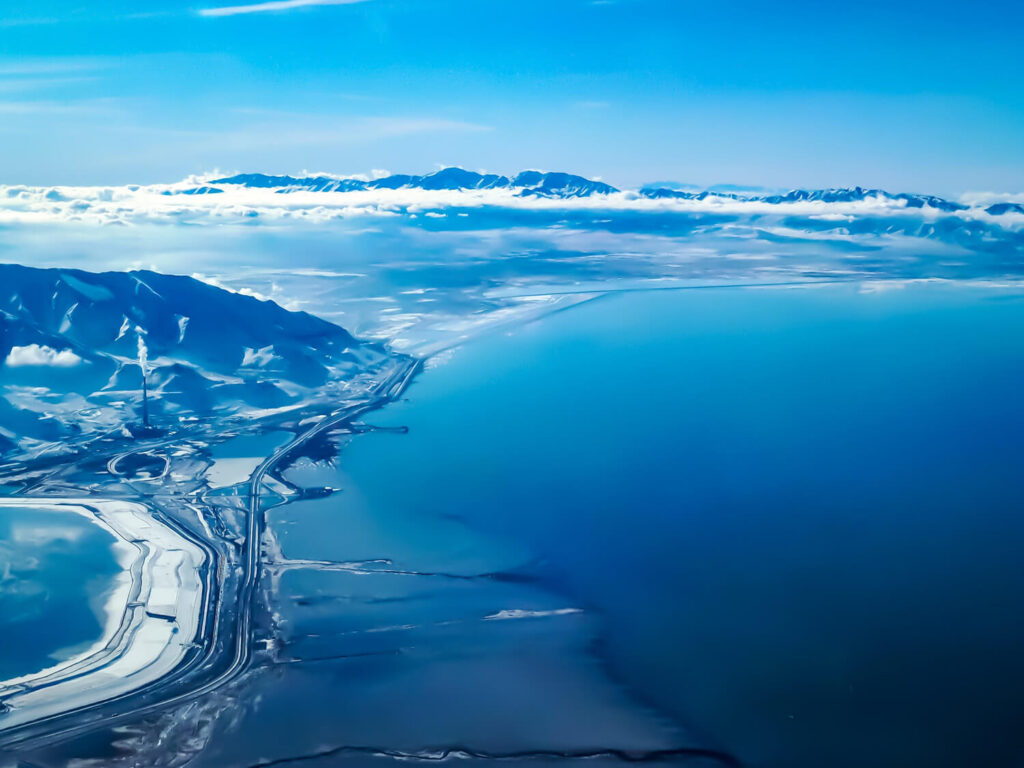
New Writing Partner Conversation New Conversation
Paragraph 110 0
No paragraph-level conversations. Start one.
New Writing Partner Conversation New Conversation
Paragraph 110, Sentence 1 0
No sentence-level conversations. Start one.
New Writing Partner Conversation New Conversation
Paragraph 110, Sentence 2 0
No sentence-level conversations. Start one.
New Writing Partner Conversation New Conversation
Paragraph 110, Sentence 3 0
No sentence-level conversations. Start one.

New Writing Partner Conversation New Conversation
Paragraph 111 (Image 9) 0
No whole image conversations. Start one.
New Writing Partner Conversation New Conversation
Whole Image 0
No whole image conversations. Start one.

Doing the Impossible

New Writing Partner Conversation New Conversation
Paragraph 112 0
No paragraph-level conversations. Start one.
New Writing Partner Conversation New Conversation
Paragraph 112, Sentence 1 0
No sentence-level conversations. Start one.

No country has been able to save a saline lake. The task itself may look impossible, but we choose to do great things not because they are easy, but because they are hard. Utah has done many seemingly impossible things when it comes to water policy. The state has pioneered some of the most innovative water leasing policies in the West. Now, the state has a chance to once again do something that no other state has done before. If Utah succeeds, it will not simply save a saline lake, but through cooperation and collaboration, its people will have saved the greatest saline lake—the Great Salt Lake.

New Writing Partner Conversation New Conversation
Paragraph 113 0
No paragraph-level conversations. Start one.
New Writing Partner Conversation New Conversation
Paragraph 113, Sentence 1 0
No sentence-level conversations. Start one.
New Writing Partner Conversation New Conversation
Paragraph 113, Sentence 2 0
No sentence-level conversations. Start one.
New Writing Partner Conversation New Conversation
Paragraph 113, Sentence 3 0
No sentence-level conversations. Start one.
New Writing Partner Conversation New Conversation
Paragraph 113, Sentence 4 0
No sentence-level conversations. Start one.
New Writing Partner Conversation New Conversation
Paragraph 113, Sentence 5 0
No sentence-level conversations. Start one.
New Writing Partner Conversation New Conversation
Paragraph 113, Sentence 6 0
No sentence-level conversations. Start one.

As water scarcity, changes in climate variability, and competing demands intensify, how we choose to respond will make all the difference. Voluntary water leasing offers a flexible and durable path forward, one that balances restoration efforts with the needs of existing water users—and without penalizing their preferences. This method not only provides a win-win for conservationists and farmers, but it also offers the flexibility necessary for farmers to adapt to weather variability in the long run. By addressing the legal, hydrological, social, and technical challenges with determined optimism, Utah can once again lead the way in environmental management—and perhaps do the “impossible” by saving the Great Salt Lake.

New Writing Partner Conversation New Conversation
Paragraph 114 0
No paragraph-level conversations. Start one.
New Writing Partner Conversation New Conversation
Paragraph 114, Sentence 1 0
No sentence-level conversations. Start one.
New Writing Partner Conversation New Conversation
Paragraph 114, Sentence 2 0
No sentence-level conversations. Start one.
New Writing Partner Conversation New Conversation
Paragraph 114, Sentence 3 0
No sentence-level conversations. Start one.
New Writing Partner Conversation New Conversation
Paragraph 114, Sentence 4 0
No sentence-level conversations. Start one.

Written By
New Writing Partner Conversation New Conversation
Paragraph 115 0
No paragraph-level conversations. Start one.
New Writing Partner Conversation New Conversation
Paragraph 115, Sentence 1 0
No sentence-level conversations. Start one.
  • Katherine Wright

    Katherine Wright is a PERC senior researcher. She earned a Ph.D. in sustainability from Arizona State University, with a particular focus on western water scarcity.

    New Writing Partner Conversation New Conversation
    Paragraph 118 0
    No paragraph-level conversations. Start one.
    New Writing Partner Conversation New Conversation
    Paragraph 118, Sentence 1 0
    No sentence-level conversations. Start one.
    New Writing Partner Conversation New Conversation
    Paragraph 118, Sentence 2 0
    No sentence-level conversations. Start one.
    New Writing Partner Conversation New Conversation
    Paragraph 117 0
    No paragraph-level conversations. Start one.
    New Writing Partner Conversation New Conversation
    Paragraph 117, Sentence 1 0
    No sentence-level conversations. Start one.
    New Writing Partner Conversation New Conversation
    Paragraph 0
    No paragraph-level conversations. Start one.
    New Writing Partner Conversation New Conversation
    Paragraph 0
    No paragraph-level conversations. Start one.
  • New Writing Partner Conversation New Conversation
    Paragraph 116 0
    No paragraph-level conversations. Start one.
    New Writing Partner Conversation New Conversation
    Whole Image 0
    No whole image conversations. Start one.
    New Writing Partner Conversation New Conversation
    Paragraph 0
    No paragraph-level conversations. Start one.
Date
New Writing Partner Conversation New Conversation
Paragraph 119 0
No paragraph-level conversations. Start one.
New Writing Partner Conversation New Conversation
Paragraph 119, Sentence 1 0
No sentence-level conversations. Start one.
New Writing Partner Conversation New Conversation
Paragraph 120 0
No paragraph-level conversations. Start one.
New Writing Partner Conversation New Conversation
Paragraph 120, Sentence 1 0
No sentence-level conversations. Start one.
Topics
New Writing Partner Conversation New Conversation
Paragraph 121 0
No paragraph-level conversations. Start one.
New Writing Partner Conversation New Conversation
Paragraph 121, Sentence 1 0
No sentence-level conversations. Start one.
  • Water
  • New Writing Partner Conversation New Conversation
    Paragraph 122 0
    No paragraph-level conversations. Start one.
    New Writing Partner Conversation New Conversation
    Paragraph 122, Sentence 1 0
    No sentence-level conversations. Start one.

Related Content
New Writing Partner Conversation New Conversation
Paragraph 123 0
No paragraph-level conversations. Start one.
New Writing Partner Conversation New Conversation
Paragraph 123, Sentence 1 0
No sentence-level conversations. Start one.
  • New Writing Partner Conversation New Conversation
    Paragraph 124 (Image 11) 0
    No whole image conversations. Start one.
    New Writing Partner Conversation New Conversation
    Whole Image 0
    No whole image conversations. Start one.

    New Writing Partner Conversation New Conversation
    Paragraph 125 0
    No paragraph-level conversations. Start one.
    New Writing Partner Conversation New Conversation
    Paragraph 125, Sentence 1 0
    No sentence-level conversations. Start one.
    New Writing Partner Conversation New Conversation
    Paragraph 127 0
    No paragraph-level conversations. Start one.
    New Writing Partner Conversation New Conversation
    Paragraph 127, Sentence 1 0
    No sentence-level conversations. Start one.
    New Writing Partner Conversation New Conversation
    Paragraph 126 0
    No paragraph-level conversations. Start one.
    New Writing Partner Conversation New Conversation
    Paragraph 126, Sentence 1 0
    No sentence-level conversations. Start one.

    New Report: Texas Water Policy Can Promote Conservation and Limit Waste
    New Writing Partner Conversation New Conversation
    Paragraph 128 0
    No paragraph-level conversations. Start one.
    New Writing Partner Conversation New Conversation
    Paragraph 128, Sentence 1 0
    No sentence-level conversations. Start one.

    Voluntary water markets offer a path to protect farms, cities, and rivers without mandates

    New Writing Partner Conversation New Conversation
    Paragraph 129 0
    No paragraph-level conversations. Start one.
    New Writing Partner Conversation New Conversation
    Paragraph 129, Sentence 1 0
    No sentence-level conversations. Start one.
  • New Writing Partner Conversation New Conversation
    Paragraph 130 (Image 12) 0
    No whole image conversations. Start one.
    New Writing Partner Conversation New Conversation
    Whole Image 0
    No whole image conversations. Start one.

    New Writing Partner Conversation New Conversation
    Paragraph 131 0
    No paragraph-level conversations. Start one.
    New Writing Partner Conversation New Conversation
    Paragraph 131, Sentence 1 0
    No sentence-level conversations. Start one.
    New Writing Partner Conversation New Conversation
    Paragraph 133 0
    No paragraph-level conversations. Start one.
    New Writing Partner Conversation New Conversation
    Paragraph 133, Sentence 1 0
    No sentence-level conversations. Start one.
    New Writing Partner Conversation New Conversation
    Paragraph 132 0
    No paragraph-level conversations. Start one.
    New Writing Partner Conversation New Conversation
    Paragraph 132, Sentence 1 0
    No sentence-level conversations. Start one.

    Improving Texas Water Markets
    New Writing Partner Conversation New Conversation
    Paragraph 134 0
    No paragraph-level conversations. Start one.
    New Writing Partner Conversation New Conversation
    Paragraph 134, Sentence 1 0
    No sentence-level conversations. Start one.

    Policy reforms to encourage conservation by reducing barriers to trading water

    New Writing Partner Conversation New Conversation
    Paragraph 135 0
    No paragraph-level conversations. Start one.
    New Writing Partner Conversation New Conversation
    Paragraph 135, Sentence 1 0
    No sentence-level conversations. Start one.

DMU Timestamp: February 10, 2026 00:42

General Document Comments 0
New Writing Partner Conversation Start a new Document-level conversation

Image
0 comments, 0 areas
add area
add comment
change display
Video
add comment

How to Start with AI-guided Writing

  • Write a quick preview for your work.
  • Enable AI features & Upload.
  • Click Ask AI on the uploaded document.
    It's on the right side of your screen next to General Document Comments.
  • Pose a question or make a comment to let the Writing Partner know what you are thinking about.
  • Click Continue.

Welcome!

Logging in, please wait... Blue_on_grey_spinner