


In Memoriam and two more articles about Wilbur H. Strickland
The Lincoln University Lion Winter 1988 Edition
In Memoriam
DR. WILBUR H. STRICKLAND, 84, died on May 3, 1987.
A practicing physician for 51 years, he earned his medical degree from Howard University and did post graduate work at the Graduate School of the University of Pennsyl-vania, New York University Post Graduate College of Medicine, and Harvard University.
Dr. Strickland practiced medicine in Philadelphia, held teaching posts at Temple University and Philadelphia General Hospitals, served on the staffs of Mercy and Douglass Hospitals, and later, when the two hospitals merged, as medical director of Mercy-Douglass Hospital. He also served as examining physician for the Pennsylvania Athletic Commission.
In 1943, Dr. Strickland entered the Medical Corp of the U.S. Army and served as Chief of Medical Service at Station Hospital No. 1 in Fort Huachu-ca, Ariz., and then as commanding officer of the 335th Station Hospital in the China, Burma-India Theatre.
Affectionately known as "Strick," he was the Grand Medical Director of the I.B.P.O.E. of W. (Elks) and a member of the Presidential Task Force on Ag-ing, the White House Task Force on Aging, the National Medical Associa-tion, state and county medical societies, Alpha Phi Alpha, Aipha Boule, and a number of boards and commissions. Dr. Strickland is survived by Charlotte West Strickland, to whom he was married for 59 years, and a sister, Sarah Strickland Scott.'
About Mercy-Douglass
When the Mercy-Douglass Hospital and School for Nurses was incorporated on March 11, 1948, priority was given to the improvement of the nursing service and the training program for medical residents.
Writer Russell F. Minton attributes the success of the merger to the hard work of persons dedicated to the institution, including the reorganized Board of Directors, chaired by Judge Herbert E. Millen, and the leadership of Dr. Wilbur H. Strickland, the first medical director of the Mercy-Douglass Hospital. In his 1951 article, Minton called attention to its services in emergencies, delivery of babies, medical training, and professional opportunities for Negro doctors.
Equal Opportunities, Equal Care: Mercy-Douglass Hospital and the Black Community of Philadelphia
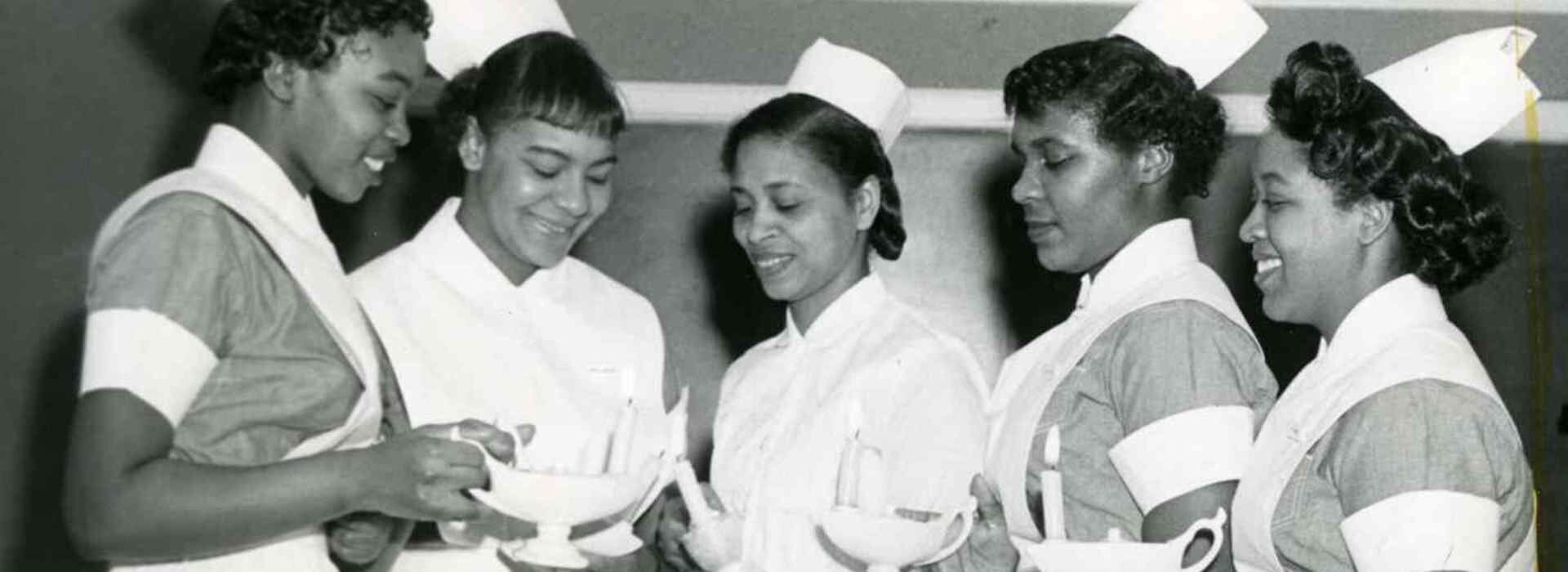
Image via the Barbara Bates Center for the Study of the History of NursinExploring the rich history of an institution dedicated to equitable patient care and medical training
This article is part of our “The Power of Nursing” series, celebrating the Year of the Nurse by sharing the stories of influential nurses throughout modern history.
Nurses provide care for a diverse population of patients with diverse needs. Today, many organizations – including healthcare, education, and government – strive to have a diverse workforce that reflects the population they serve.
For many years this was not the trend in the field of nursing, which was largely a profession pursued by white women with the financial means to attend nursing school. Following the Civil War, proponents of the abolitionist movement continued to advocate for greater rights and opportunities for Black Americans, including within the medical field.
The Mercy-Douglass Hospital is a powerful example of how advocating for diversity and inclusion greatly benefitted not only the nursing profession, but society as a whole.
Providing Opportunities, Improving Outcomes
The Mercy Hospital and Douglass Hospital (later merged into a single institution, the Mercy-Douglass Hospital) were founded with the express goal to create opportunities for Black “physicians and young women desirous of nurse training” and to improve the experience of Black patients in Philadelphia.
The Douglass Hospital, named after prominent abolitionist Frederick Douglass, was founded in 1895 by Dr. Nathaniel Mossel. He was the first Black graduate of the University of Pennsylvania Medical School, and dreamed of a “hospital where [African American] physicians might have an equal opportunity to practice, where [African American] patients could be cared for, and where [African American] nurses might be taught the art of healing the sick.”
He had himself experienced discrimination firsthand when he was denied admission to prestigious schools and internships. This provided him with a powerful motivation to grow Douglass Hospital into an institution that provided an array of professional experiences for the Black physicians and nurses who worked and studied there.
Dr. Mossel soon hired Dr. Eugene Hinson, another prominent Black physician, to grow the hospital in size and range of offerings. As the hospital expanded, they struggled financially and by the late 1920s, their nursing program lost accreditation by the state.
Dr. Hinson had left Douglass Hospital in 1905 and went on to establish Mercy Hospital, where he aimed to provide educational opportunities he felt were lacking at Douglass. Mercy Hospital also encountered financial difficulties. The two institutions merged in 1948 and together were able to continue and expand upon their contributions to Black healthcare providers and their shared missions.
Empowering Black Nurses
In the 1940s, new leadership at the hospital made several changes that greatly benefited its nurses. Medical Director W. H. Strickland recognized the correlation between patient experiences and addressing the needs of nurses. He established a minimum salary, a 40-hour work week, and added additional nursing duties.
The hospital’s Nurse Training School soon began to attract strong students and established affiliations with Philadelphia General Hospital and the Philadelphia Hospital for Contagious Diseases. This meant that not only were Black nurses working at hospitals serving the Black community, but also at other prominent hospitals serving patients of all races and socioeconomic status. This created greater opportunities for Black nurses and also encouraged the city’s white residents to review their biases about who could be a nurse.
By the time it closed in 1960, the hospital had greatly impacted the Black community. According to a report written in 1951, the Mercy-Douglas Hospital trained over 200 Black medical students, graduated 431 Black nurses, and provided professional development and employment opportunities for over 125 Black physicians.
Lasting Legacy
The impact of Mercy-Douglas Hospital remains relevant to this day, as many organizations strive to promote diversity, equity, and inclusion among their staffs. This both provides richer employee experiences and makes a powerful impact on patient care and social justice issues. Promoting the advancement of Black nurses created opportunities not only for individuals, but opportunity to change society and healthcare for the better.
The Foundation gratefully acknowledges the consultation provided by Drs. Cynthia Connolly and Patricia D’Antonio of the Barbara Bates Center for the Study of the History of Nursing. This article drew from primary source material, made available to the public courtesy of The University of Pennsylvania.
 on the uploaded document.
0 General Document comments
0 Sentence and Paragraph comments
0 Image and Video comments
General Document Comments 0

